Category: Uncategorised

  • Grounded Serenity: Balancing Your Root Chakra, Muladhara

    Grounded Serenity: Balancing Your Root Chakra, Muladhara

    In the quest for inner peace and spiritual growth, the root chakra, or Muladhara, serves as the vital foundation. 

    This energy center, located at the base of the spine, is the cornerstone of our sense of stability, security, and groundedness. We tend to see the root chakra as an easy chakra to balance, in contrast to the Ajna chakra for example, our third eye. However, in reality, Muladhara chakra is often unbalanced.

    Balancing the root chakra requires mindful practices that promote grounding and reconnect us with the earth’s stabilizing energy, providing a solid foundation for overall well-being and spiritual progression.

    Join me on a journey to uncover the foundational wisdom of the Muladhara Chakra. This article includes grounded practices, yoga posture, mantras and more…

    Understanding the Root Chakra (Muladhara)

    The root chakra, Muladhara in Sanskrit (from mul “base”, and adhara, “support”), is the first of the seven main chakras in the body. It is associated with the color red and the element of earth. This chakra governs our basic survival needs, such as food, shelter, and safety, as well as our connection to the physical world.

    When the root chakra is balanced, we feel secure, grounded, and confident. We are able to face life’s challenges with resilience and maintain a strong sense of self. Conversely, an imbalanced root chakra can lead to feelings of anxiety, fear, and instability.

    Muladhara Chakra According to Hindu Tantrism

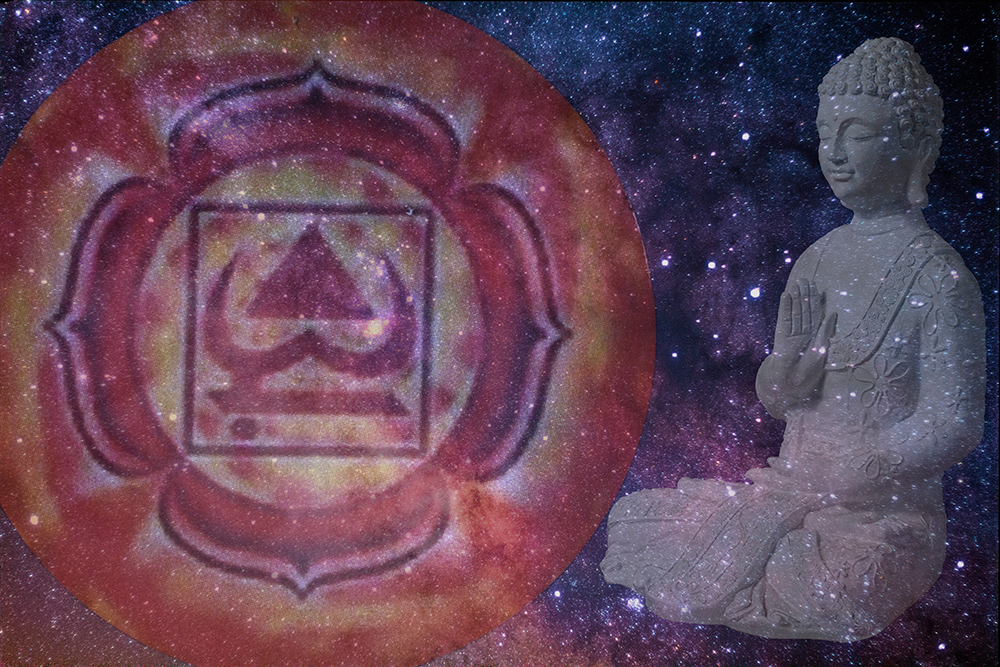
    The Muladhara Chakra, represented by a four-petaled lotus and the color red, is associated with the element of earth. 

    In Hindu Tantrism, the Muladhara Chakra is seen as the reservoir of Kundalini energy, the dormant spiritual energy that lies coiled like a serpent at the base of the spine. When this chakra is awakened and balanced, it initiates the ascent of Kundalini energy through the other chakras, leading to spiritual awakening and enlightenment.

    What Causes an Imbalance in the Muladhara Chakra?

    An imbalance in the Muladhara Chakra can be caused by various factors, including:

    1. Fear and Insecurity: Persistent feelings of fear, insecurity, or anxiety can disrupt the energy flow in the Muladhara Chakra, leading to imbalance.

    2. Trauma and Childhood Issues: Past traumatic experiences, particularly those related to survival, safety, and basic needs during childhood, can leave lasting imprints on the root chakra.

    3. Lack of Grounding: Insufficient connection with the earth and nature, due to urban lifestyles or lack of grounding practices, can weaken the root chakra.

    4. Physical Neglect: Poor physical health, neglecting basic needs such as nutrition, sleep, and exercise, can affect the stability and vitality of the root chakra.

    5. Financial Instability: Issues related to money, financial insecurity, or instability can directly impact the Muladhara Chakra, as it governs our sense of stability and material security.

    6. Disconnectedness from Earthly Reality: Overemphasis on spiritual pursuits without grounding practices can lead to imbalance in the root chakra, which is rooted in the physical world.

    7. Environmental Factors: Chaotic or unstable living environments, lack of safety in surroundings, or exposure to constant stressors can disrupt the Muladhara Chakra’s equilibrium.

    Addressing these factors through grounding techniques, healing practices, and mindful awareness can help restore balance to the Muladhara Chakra, fostering a sense of stability, security, and well-being.

    Signs of a balanced Muladhara Chakra

    When the Muladhara Chakra is balanced, you will experience a deep sense of grounding, stability, and security in your life. You will feel rooted, physically and emotionally, with a strong connection to the earth and your physical body.

    One of the primary signs of a balanced Muladhara Chakra is a strong sense of personal boundaries and a healthy relationship with your physical needs. You will feel confident in your ability to provide for yourself and meet your basic requirements, such as food, shelter, and safety. This sense of security and self-reliance will translate into a calm and centered presence, as you feel firmly anchored in the present moment.

    Additionally, a balanced Muladhara Chakra is often reflected in your physical health and vitality. You may experience increased energy, better sleep, and a stronger immune system. Your body will feel more aligned and in harmony, with a greater sense of physical awareness and embodiment. This grounded energy will also manifest in your relationships, as you will be able to establish healthy boundaries and maintain a strong foundation for your connections with others.

    Techniques to activate and balance Muladhara Chakra

    Fortunately, there are numerous techniques and practices you can incorporate to activate and balance your Muladhara Chakra. By engaging in these practices, you can restore a sense of grounding, stability, and security in your life, and unlock the full potential of this powerful energy center.

    Here are some beautiful ways to activate and balance your root chakra:

    1- Grounding Practices:

    Grounding exercises offer profound benefits for balancing the Muladhara Chakra, the foundational energy center located at the base of the spine. Engaging in activities such as walking barefoot on the earth, gardening, or immersing oneself in natural surroundings constitutes a powerful practice for nurturing this essential chakra.

    When we walk barefoot on grass or soil, the earth’s electrons are absorbed through the soles of our feet, promoting balance in our body’s energy system. This process, known as earthing or grounding, helps discharge excess energy and restore harmony to the Muladhara Chakra.

    2- Yoga poses and exercises for Muladhara Chakra activation

    Yoga is an incredibly potent practice for working with the Muladhara Chakra. The physical postures, or asanas, can help to ground and center your energy, while also stimulating the flow of prana (life force) through this energy center.

    Some of the most beneficial yoga poses for the Muladhara Chakra include:

    • Mountain Pose (Tadasana): This grounding pose helps to establish a strong foundation and connection to the earth.
    • Downward-Facing Dog (Adho Mukha Svanasana): This invigorating pose strengthens the legs and opens the hips, promoting a sense of stability and security.
    • Yogi Squat Pose (Malasana): By engaging the lower body, this pose can help to activate the Muladhara Chakra.

    In addition to these asanas, you can also incorporate grounding exercises, such as walking lunges or squats, to further stimulate the Muladhara Chakra. Consistent practice of these poses and exercises can help to restore balance and vitality to this foundational energy center.

    3- Meditations and affirmations for Muladhara Chakra healing

    Alongside physical practices, the Muladhara Chakra can also be balanced and activated through the power of the mind and spirit. Meditation and affirmations are powerful tools for working with this energy center, as they allow you to direct your focus and intention towards its healing and empowerment.

    One effective meditation for the Muladhara Chakra is the “Root Chakra Meditation.” In this practice, you can visualize a glowing red light at the base of your spine, radiating outwards and filling your entire body with a sense of grounding and stability. As you breathe deeply, imagine this light growing stronger and brighter, anchoring you to the earth and providing a solid foundation for your being.

    Affirmations can also be a potent way to work with the Muladhara Chakra. Repeating positive statements that affirm your sense of security, abundance, and connection to the physical world can help to reprogram limiting beliefs and activate this energy center.

    Some examples of powerful Muladhara Chakra affirmations include:

    “I am grounded, stable, and secure.”

    “I trust in my ability to provide for my basic needs.”

    “I am rooted in the earth, and I am safe and protected.”

    “I am abundant, and I have all that I need.”

    “My connection to the physical world is strong and nourishing.”

    Incorporating these meditations and affirmations into your daily practice can have a profound impact on the health and balance of your Muladhara Chakra.

    4- Crystals and gemstones for Muladhara Chakra

    Crystals and gemstones can be powerful allies in the journey of Muladhara Chakra healing and activation. Each stone carries its own unique energetic properties, and by working with the right crystals, you can support the balance and vitality of this foundational energy center.

    Some of the most beneficial crystals for the Muladhara Chakra include:

    • Red Jasper: A grounding and stabilizing stone that can help to anchor your energy and provide a sense of security.
    • Hematite: This iron-rich stone is known for its ability to enhance feelings of rootedness and connection to the earth.
    • Kentucky Quartz: This crystal is known for its ability to ground and center the energy, making it an excellent choice for Muladhara Chakra work.

    You can incorporate these crystals into your daily practice by placing them on or around your Muladhara Chakra, carrying them with you, or using them in meditation. Experiment with different stones and see which ones resonate most strongly with your energy and needs.

    5- Essential oils and aromatherapy for Muladhara Chakra

    In addition to crystals and gemstones, essential oils can also be a powerful tool for working with the Muladhara Chakra. The aromatic compounds in these oils can have a profound effect on our emotional, physical, and energetic states, making them an invaluable resource for chakra balancing.

    Some of the most beneficial essential oils for the Muladhara Chakra include:

    • Vetiver: This earthy, grounding oil is known for its ability to anchor and stabilize the energy, making it an excellent choice for Muladhara Chakra work.
    • Patchouli: With its rich, musky aroma, patchouli can help to cultivate a sense of security, abundance, and connection to the physical world.
    • Sandalwood: Known for its ability to deepen spiritual awareness, sandalwood can also be used to balance the Muladhara Chakra.
    • Ginger: With its warm, spicy scent, ginger can help to stimulate and activate the Muladhara Chakra, promoting a sense of vitality and physical grounding.

    You can incorporate these essential oils into your practice through diffusion, topical application, or by adding them to your bath or massage blends. Experiment with different combinations and see which ones resonate most strongly with your energy and needs.

    Conclusion: Harnessing the power of Muladhara Chakra

    The Muladhara Chakra is the foundation of our energetic and physical well-being, and by understanding its significance and learning how to work with it, we can unlock a wealth of untapped potential within ourselves.

    Whether you are struggling with feelings of disconnection, insecurity, or a lack of purpose, tapping into the power of the Muladhara Chakra can help to restore a sense of stability, grounding, and inner strength. Through practices such as yoga, meditation, crystal work, and essential oil use, you can activate this energy center and experience a profound transformation in your life.

    As you continue on your journey of self-discovery and personal growth, remember that the power to create the life you desire lies within you. By harnessing the energy of the Muladhara Chakra, you can cultivate a deep sense of rootedness, confidence, and abundance, and embark on a path of true fulfillment and purpose. Embrace the power of the Muladhara Chakra, and watch as your life blossoms with new possibilities.
  • How to Truly Take Care of Your Emotional Health?

    How to Truly Take Care of Your Emotional Health?

    Close your eyes for a moment, take a deep breath and think about the words “emotional health”… How does that resonate to you?

    Emotional health is always a big one! Regardless of individual backgrounds or experiences, maintaining emotional wellness often proves to be challenging or fragile at times.

    No wonder that entire populations and philosophies, like Buddhism or Hinduism, decided to focus on well-being and the pursuit of self-realization.

    After a few years of experience in this area, I can tell that emotional health is consistently a significant factor in our lives, even if you are a therapist or a spiritual guide.

    Please take the time to read this article to the end. Within it, I’ll be sharing my personal top 10 ways to improve my mood and combat feelings of depression. Additionally, if you happen to know someone who could benefit from this information, please consider sharing it with them.

    What is Emotional Health?

    Emotional health, often referred to as mental or psychological well-being, is a fundamental aspect of our overall wellness. It encompasses our ability to understand and manage our feelings, cope with stress, maintain healthy relationships, and navigate life’s challenges with resilience and adaptability.

    Emotional health is not merely the absence of mental illness but rather the presence of positive emotional states, such as happiness, contentment, and inner peace.

    Cultivating emotional health involves developing self-awareness, practicing self-care, seeking support when needed, and fostering meaningful connections with others. By prioritizing our emotional well-being, we can lead more fulfilling lives and better cope with the complexities of the human experience.

    Why is it hard to cope with emotional health?

    Coping with emotional health can be difficult for various reasons. Emotions are intricate and can sometimes feel overwhelming, and navigating them requires patience and understanding.

    Additionally, societal attitudes towards mental health can create barriers to seeking support or expressing emotions openly, which can leave individuals feeling isolated. Life’s challenges and stressors, such as work pressure or relationship issues, can also add to emotional struggles.

    Finally, our psychological well-being can sometimes be affected by invisible factors that are hard to control or even identify, like our own hormones or some specific conditions.

    In today’s fast-paced world, finding time for self-care and reflection can be challenging, making it important to approach emotional well-being with compassion and understanding for ourselves and others.

    If you ever find yourself feeling overwhelmed by your emotions and in need of a moment to center yourself, consider joining me for a yoga or embodiment session. I’m here and eager to share my experience with you. Feel free to reach out—I’d love to help.

    My Top 10 Recommendations to Improve your Emotional Health

    You may have realized by now that even as a therapist, maintaining emotional balance can sometimes present its own set of challenges.

    No one is perpetually 100% happy! If you believe otherwise, you’re mistaken. While some individuals may generally exude happiness, everyone encounters the unpredictable twists and turns of life. Life resembles a roller coaster ride, where learning to embrace it with arms raised high is key!

    Given my past battle with depression and self-sabotage, I’ve cultivated several coping techniques to nurture my emotional health.

    Here are my top 10 tips to fighting depression and balance your emotional health:

    1- Make a list of what makes you happy

    Take a moment to recognize the small things that boost your mood throughout the day, and even if you’re aware of them mentally, consider writting them down. Trust me, it holds significance!

    I often encourage my students to engage in journaling. Sometimes, despite knowing something, it gets lost in the clutter of our thoughts. Interestingly, putting pen to paper breathes life into these thoughts, aiding in our commitment to them.

    Craft your own “Happiness” checklist and revisit it whenever necessary. Aim to incorporate activities from your list into your routine at least three times a week, focusing on a few if not all. 

    On the other hand, become more sensitive to what doesn’t contribute to your happiness or creates mental conflict (such as relationships, certain food or drinks intake, or certain activities), and gradually work on reducing their influence in your life.

    2- Incorporate self-care in your daily routine

    In line with Ayurvedic principles, I always advocate for establishing a routine, even if it’s just a small one.

    Routines provide a framework for our days, which is essential for our overall well-being. As humans, we thrive on structure to feel anchored and to cultivate a sense of security and comfort in our lives.

    Your routine doesn’t need to be elaborate; even dedicating just five minutes to meditation or a breathing exercise upon waking can suffice. Consider incorporating elements from the “happiness” list I mentioned earlier into your daily routine. Imagine infusing some of your favorite mood-boosting activities into your day.

    Grab your journal and jot down your ideal day.

    3- Talk to your loved-ones

    Feeling down often leads us to withdraw from social interactions, making social isolation a common symptom of depression. Interestingly, sometimes we may not even realize that we’re avoiding people, as it can happen subtly over time.

    However, it’s crucial to break out of this pattern and maintain connections with friends. Regular social interaction plays a vital role in our mental well-being, providing support, companionship, and a sense of belonging.

    So, make an effort to reach out to your friends regularly. Whether it’s through messaging, calls, or meeting up in person, staying connected is key. Check in with them every couple of days, share updates, or simply ask how they’re doing. Keeping the lines of communication open not only strengthens your friendships but also contributes to your own emotional resilience. After all, in times of need, having friends to lean on can make all the difference.

    4- Explore different therapies

    Despite the gradual normalization of therapy within our society, seeking professional help still presents a significant obstacle for many individuals.

    Why? – This reluctance can be attributed to the perception that addressing mental health concerns places us in the realm of “serious” issues.

    It’s important to recognize that there’s nothing inherently wrong with us. We’re born with a perfectly neutral mentality and nervous system. Consider the current state of the world and the various life events we encounter. Were our human nervous systems designed to handle these situations? No. However, it’s crucial to understand that our nervous systems are perfectly adaptive and react to events in a completely normal manner.

    Whatever challenges your nervous system is currently facing, it’s crucial to understand that this is not your fault!

    Therapeutic practices have been ingrained in human communities throughout history, as we’ve always relied on communal support. Today, we’re fortunate to have a diverse range of therapeutic approaches available, catering to various needs and preferences. From conventional medical therapy to holistic practices like embodiment, somatic yoga therapy, and dance therapy, there’s something for everyone.

    If you’re interested in exploring any of these options together, please take a moment to browse through my offerings and don’t hesitate to reach out. I am here and happy to support you on your journey.

    5- Practice mindfulness

    It’s no myth that meditation and mindfulness can help balance your emotional health.

    Meditation is a profound practice that fosters self-awareness and introspection by allowing individuals to observe their thoughts and emotions without judgment. This heightened awareness enables individuals to recognize and understand their emotions more clearly, leading to better regulation of mood and responses to challenging situations. By cultivating a sense of mindfulness and detachment, meditation empowers individuals to navigate their inner landscape with greater clarity and equanimity, fostering emotional resilience and well-being.

    Through regular meditation practice, individuals develop a deeper understanding of themselves and gain insight into the underlying causes of their emotions. This process of self-discovery enables individuals to respond to life’s challenges with greater wisdom and compassion, ultimately leading to enhanced emotional well-being and a more fulfilling life journey.

    6- Drink raw cacao in the morning

    It might be hard to believe if you’ve never drunk raw ceremonial cacao before, but my morning cacao has been a real game-changer for me!

    Packed with mood-enhancing compounds like theobromine, phenylethylamine (PEA), and serotonin precursors, raw cacao can give you the dopamine boost you need to start your day with a smile. By stimulating the release of dopamine, the brain’s “feel-good” neurotransmitter, raw cacao helps elevate mood and combat feelings of depression. Its rich antioxidant content also supports overall well-being, while magnesium promotes relaxation and reduces stress.

    Additionally, I’ve discovered that the morning ritual of preparing my cacao is incredibly meditative. It provides the ideal opportunity to set intentions for the day ahead, fostering a practice of gratitude and self-compassion, as elaborated in the concluding sections of this article.

    I plan to delve deeper into this topic in the future. If you have any inquiries regarding cacao or its preparation methods, feel free to reach out. I’m more than happy to offer assistance and share insights.

    7- Connect with nature

    Connecting with nature offers profound benefits for emotional health. Immersing oneself in natural environments, such as forests, parks, or beaches, provides a welcome respite from the hustle and bustle of daily life. The sights, sounds, and scents of nature have a calming effect on the mind and body, reducing stress levels and promoting relaxation. Time spent outdoors encourages individuals to slow down and appreciate the present moment, fostering mindfulness and a sense of inner peace. Engaging in outdoor activities also promotes physical exercise, releasing endorphins and boosting mood. Moreover, experiencing the beauty and tranquility of nature instills a sense of awe and wonder, promoting feelings of gratitude and connectedness with the world around us.

    Furthermore, connecting with nature offers opportunities for reflection and rejuvenation. Whether it’s taking a leisurely stroll through a park or embarking on a hike in the mountains, spending time in natural settings encourages introspection and self-discovery. Nature serves as a source of inspiration, creativity, and solace, providing individuals with a space to unwind and recharge. By nurturing a deep connection with the natural world, individuals can cultivate greater emotional resilience, happiness, and overall well-being, enriching their lives with moments of beauty, serenity, and joy.

    8- Set Boundaries

    Setting boundaries is a pivotal aspect of maintaining emotional well-being. It involves learning to assertively say no to activities or commitments that drain your energy or contribute to stress. By establishing healthy boundaries, you create space for prioritizing self-care and protecting your mental and emotional health. This means recognizing your limits and being willing to communicate them effectively to others.

    Setting boundaries allows you to honor your needs and values, ensuring that you allocate time and energy to activities that align with your priorities and bring you genuine fulfillment. Ultimately, by setting boundaries, you cultivate a greater sense of autonomy, self-respect, and balance in your life, which are essential for overall emotional well-being and resilience.

    9- Cultivate a positive mindset

    When experiencing depression, negative thoughts often pervade our perception. Take steps to recognize these negative patterns and consciously shift your focus towards something positive within the situation. Encourage yourself to identify a positive aspect, and repeatedly affirm it in your mind, as if persuading yourself to see this perspective.

    10- Practice gratitude & self-compassion

    If you’ve joined me for yoga sessions, you probably know how much I cherish gratitude. By acknowledging and appreciating the abundance in our lives, we cultivate optimism and contentment, even in challenging circumstances!

    Expressing gratitude strengthens interpersonal relationships, promotes self-care, and encourages acts of kindness and generosity, fostering a sense of connection and fulfillment. Overall, incorporating gratitude practices into our daily lives promotes emotional resilience, enhances social bonds, and contributes to a more positive and fulfilling outlook on life.

    As you’re practising gratitude, practice self-compassion too. Be kind and forgiving toward yourself. Treat yourself with the same compassion and understanding that you would offer to a friend facing similar challenges. By extending this level of care inward, you create a nurturing environment for growth and resilience, fostering happiness and well-being.

    want to learn more on how to practice gratitude and self-compassion? Send me a message and I’ll share my practice with you!

    I hope that you enjoy reading this article. If you have further questions or would like to communicate with me, please do. I am here.

    Also, remember to pass along this article if you believe it could assist someone you know.

  • What is Embodiment? From its History to its practice

    What is Embodiment? From its History to its practice

    Embodiment has become a ubiquitous term in today’s language. It finds its way into various contexts such as dance, yoga, love, and more, often used without a true understanding of its underlying significance.

    Is embodiment just dancing and expressing yourself? What is embodiment work exactly? 

    Here is a quote that one of my first embodiment teachers shared to introduce us to the concept of embodiment:

    “By changing your body expression, you can change your walk through life”  

    Embodiment and Disembodiment in History

    In order to understand what embodiment is and why it is such a thing nowadays, we need to understand its history, or in other words the history between humans and their body.

    History has evolved in a way that human beings could only detach from their body. 

    Here are all the major events that created disembodiment in the human body:

    1. Agriculture era: When agriculture started to develop 10 000 years ago, the body started to become just a tool for harvest. Humans started to become numb to their body pain.
    2. The philosophy of “Dualism”: In the 17th century, philosophers like Platon or Descartes argued that the mind and the body are completely separate and distinct entities. The mind is a non-material, thinking substance, while the body is a material, extended substance.
    3. Religion and the body: Augustine’s writings  gained significant influence within the Christian and Catholic faiths, as he espoused the view that the body was inherently “sinful” and required stringent regulation. 
    4. Industrialisation era: In the 18th and 19th centuries, heavy industrialisation development reinforced this image of the body as a machine.
    5. Consumerism: Nowadays in our modern society, the body is often just seen as an object, or even as a brand.

    Due to our historical context, our modern society is disembodied, underscoring the contemporary significance of embodiment. 

    Defining the Word “Embodiment”

    Just by reading the above history of disembodiment, we can now understand the concept of embodiment as a form of body awareness.

    A short definition of embodiment would be: “Embodiment is the way we are as a body.”

    Embodiment is a form of somatic therapy in which we use body expressions to understand and heal the mind. It challenges traditional views that separate the mind from the body and highlights the importance of considering the body’s role in shaping our mental processes and perceptions.

    We all have different body patterns that define who we are, even though we are not always aware of them (the way we walk, face expressions..). These body patterns originate from our history, our environment, our culture or our education… 

    Embodiment is a somatic experience in which we explore these body patterns in order to discover our history, our trauma and who we really are… By practising embodiment work, we can heal ourselves and eventually change our life’s direction. Read the next paragraph to understand how this works.

    One of my first Embodiment therapy teachers once said: “By changing your body patterns, you can change your walk through life”. This is probably the best definition of what embodiment work is. 

    How Do you Practice Embodiment?

    embodiment-embodied-yoga-practice

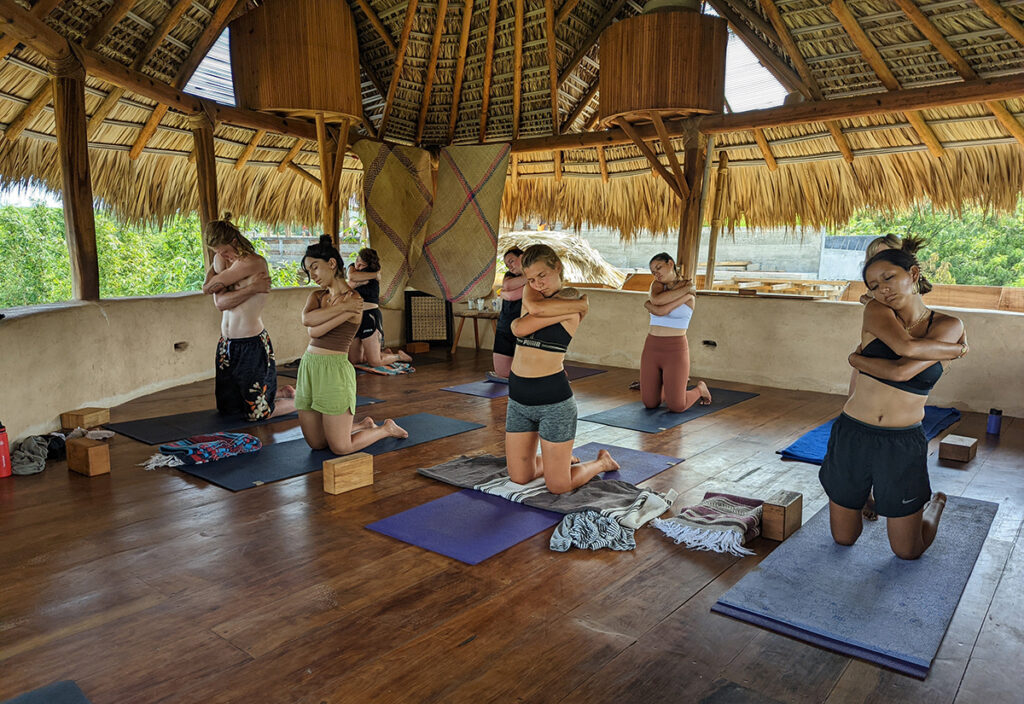
    Image of an Embodied Yoga Class with Cara Shanti

    Embodiment work is a holistic approach to personal growth, self-awareness, and healing that emphasizes the connection between mind, body, and emotions. It involves various practices and techniques aimed at enhancing an individual’s awareness of their body, sensations, emotions, and how they manifest in daily life. Embodiment work can be used for therapeutic purposes, self-improvement, and personal development.

    Here are some examples of embodiment work:

    • Somatic Embodiment Therapy : Embodiment work can be particularly effective for individuals who have experienced trauma. It allows them to safely explore and release traumatic memories and emotions stored in the body. This process can support healing and recovery. As an Embodiment Therapist, I can guide you if you have further questions about embodiment and somatic therapy.
    • Embodied Yoga : Embodied yoga goes beyond the physical postures (asanas) commonly associated with yoga and explores the felt sense of the postures (see above picture, which gives deeper insights to the practitioner. Embodied yoga draws from various yoga traditions and somatic practices to create a holistic and mindful experience.
    • Dance Therapy : Dance therapy, also known as dance/movement therapy (DMT), is a therapeutic approach that uses dance and movement to promote emotional, psychological, and physical well-being. It emphasises the therapeutic potential of movement and dance to improve mental health and overall quality of life
    • Embodiment Coaching : Embodiment coaching is a holistic approach to personal development and self-improvement that focuses on enhancing an individual’s awareness and connection with their body, emotions, and the present moment. Embodiment coaching can be used to live a more authentic life or to achieve some specific goals (love, leadership…)
    • Art : Embodiment in art refers to the representation, expression, or exploration of the human body or the concept of embodiment itself through various artistic mediums and forms (paint, sculpture…).

    There are many more ways to practice embodiment, but here are the most common embodiment work you are more likely to find.

    As an Embodiment professional and embodied yoga teacher, I can help you reconnect with your body intelligence and guide you in your path to healing. Drop me a message via email or whatsapp if you want to have a little chat.

    What is Embodiment in Psychology?

    Embodiment in psychology refers to the idea that cognitive processes, emotions, and perception are not solely the result of brain activity but are also influenced by the body and its interactions with the environment. It emphasizes the interconnectedness of the mind and body in shaping human experiences and behaviours.

    Here are some key aspects of embodiment in psychology:

    • Sensorimotor Interactions: Embodiment theory suggests that our sensory and motor systems play a crucial role in shaping our cognitive processes. For example, the way we perceive and understand concepts may be influenced by our bodily experiences and interactions with the physical world.
    • Embodied Cognition: This concept suggests that cognitive processes, such as memory, problem-solving, and language, are not purely abstract mental activities but are grounded in our bodily experiences. For instance, when we think about an action, our brain might simulate the sensory and motor experiences associated with that action.
    • Emotional Embodiment: Emotions are not just mental states but also involve physiological and bodily responses. Embodiment theory proposes that our emotional experiences are influenced by the feedback from our bodies, such as heart rate, facial expressions, and bodily sensations. For example, smiling can lead to feelings of happiness, and a racing heart can intensify feelings of anxiety.
    • Perceptual Embodiment: Perception is also influenced by our bodily experiences. How we perceive and interpret sensory information can be affected by our physical sensations and movements. For example, the way we perceive the weight of an object may depend on our previous experiences handling similar objects.
    • Social and Cultural Aspects: Embodiment theory can extend to social and cultural contexts. It suggests that our cultural upbringing and social interactions can shape our embodied experiences and influence our cognition and behavior. Cultural practices, rituals, and body language all play a role in this process.

    Embodiment theory has gained attention in various areas of psychology, including cognitive psychology, social psychology, and neuroscience, as it provides a more holistic understanding of human experience and behavior.

    What is Embodiment in Philosophy?

    In philosophy, the concept of embodiment refers to the idea that the body is not merely a vessel for the mind or a separate entity but is integral to our understanding of consciousness, perception, and human existence.

    Embodiment philosophy challenges traditional dualistic views that separate the mind and body, emphasizing the interconnectedness of physical and mental aspects of human experience. It has been particularly influential in the fields of phenomenology, existentialism, and philosophy of mind.

    Here are some key aspects of embodiment in philosophy:

    • Phenomenological Embodiment: Phenomenology is a philosophical approach that focuses on the first-person subjective experience of consciousness. Embodiment plays a central role in phenomenology, as it emphasizes that our experience of the world is always embodied. Philosophers like Maurice Merleau-Ponty argued that our perceptions and understanding of the world are fundamentally shaped by our bodily experiences, movements, and sensations.
    • Existentialist Embodiment: Existentialism is a philosophical movement that explores questions of human existence and freedom. Existentialist thinkers like Jean-Paul Sartre and Simone de Beauvoir also recognized the importance of embodiment. They argued that our bodies are not mere objects but are central to our experience of freedom, choice, and responsibility. For Sartre, our bodies are both a limitation and a source of possibilities for our existence.
    • Philosophy of Mind: In the philosophy of mind, embodiment has led to the development of theories like embodied cognition. These theories challenge traditional computational models of the mind and propose that cognitive processes are grounded in bodily experiences and interactions with the environment. Embodied cognition suggests that our bodies and their interactions with the world play a fundamental role in shaping our mental processes.
    • Ethics and Morality: Some philosophers have explored the ethical implications of embodiment. For instance, the feminist philosopher Iris Marion Young argued that our bodily experiences, including how we are perceived and treated by others, have a significant impact on our moral and political lives. She highlighted the concept of the “lived body” as central to understanding social justice and oppression.
    • Embodied Subjectivity: Embodiment philosophy also addresses the nature of subjective experience. It suggests that our sense of self and subjectivity is intimately tied to our bodies. The way we experience ourselves and others is shaped by our bodily sensations, emotions, and physical presence in the world.

    These concepts make us realise the profound impact Embodiment had on various philosophical traditions and how it continues to influence contemporary discussions in philosophy of mind, ethics, and phenomenology.

    Still have more questions about Embodiment? Want to try a 20 min free session with me? Contact me via email or Whatsapp!

  • What Are the Best Yoga Activities in Puerto Escondido, Mexico?

    What Are the Best Yoga Activities in Puerto Escondido, Mexico?

    Puerto Escondido is probably one of Mexico’s best surf and yoga towns! There is so much to discover and experience!

    Many yogis, including myself, undergo a transformation during their time in Puerto! In fact, it’s common here to refer to Puerto Escondido as a “vortex”. Who knows, maybe you’ll get trapped too!

    By walking the street of La Punta or Rinconada, you’ll quickly notice all the different flyers for yoga-related activities!

    Yoga, Cacao Ceremonies, Sound Healing, Reiki, Kirtan… You can find everything you want here! So many things that you might feel a bit overwhelmed at some points…

    I have been living in Puerto Escondido for the last 4 years and here are my recommendations:

    I- Build a Safe and Personalised Yoga Practice with a Private Lesson

    Yoga studios are everywhere in Puerto, and they have a lot of good teachers! If you still don’t know where to go, please read my article about the best places to practice yoga in Puerto

    When it comes to becoming a regular yoga practitioner, it’s always good to take a private lesson, at least once. With time, wrong alignments can seriously lead to an injury, and the teachers cannot always check on you during a public class. 

    Moreover, when you start practising yoga regularly, you will naturally feel the need to practice by yourself at home. Youtube videos are amazing for this but keep in mind that they’re not always safe, as no one is checking your posture and not every yoga posture are good for everyone.

    I regularly give private lessons to my students and help them build a strong and safe practice that fits their specific needs.

    Don’t hesitate to contact me for more guidance. You can also try a few classes with different teachers until you find one that you connect with.  

    II- Go to a Traditional Cacao Ceremony

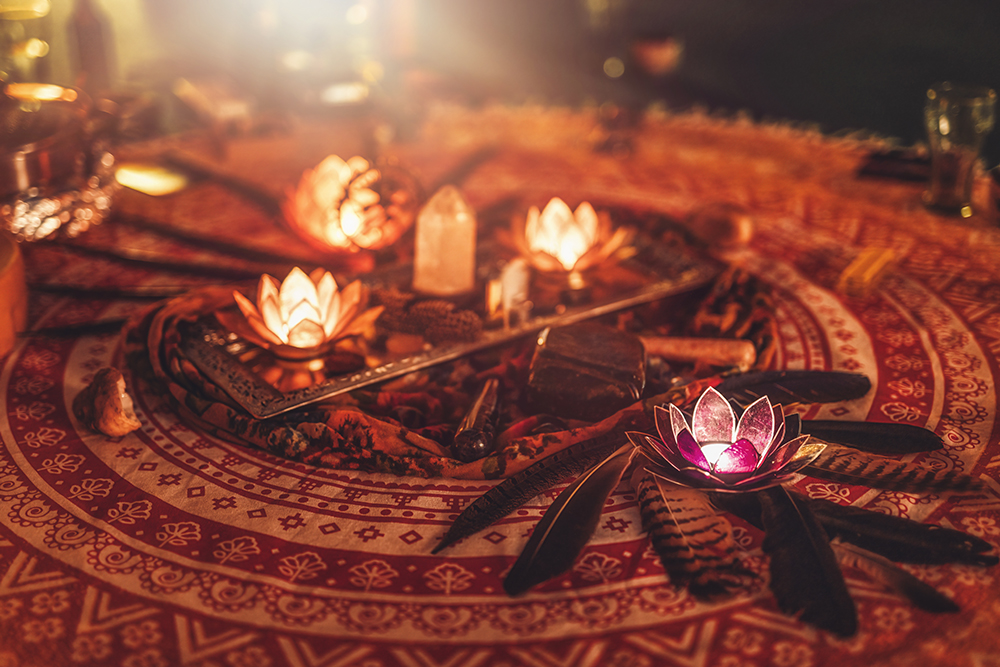
    cacao-ceremony-puerto-escondido

    A cacao ceremony is a spiritual gathering that involves the ceremonial use of cacao, which is the raw form of chocolate.

    You might find it a bit strange to gather around a piece of chocolate, but cacao is big in Latin America, and it has nothing to do with your table of Cadbury that you eat at home! This one is so strong that you might even feel a bit high after a couple of cups. 

    Cacao has been traditionally used by indigenous cultures in Central and South America for its medicinal benefits and ceremonial purposes. 

    During a cacao ceremony, participants typically consume a specially prepared cacao elixir made from raw cacao beans. The ceremony is often led by a facilitator or shaman who guides the participants through various rituals, meditations, and activities.

    The purpose of a cacao ceremony can vary depending on the tradition or intention of the facilitator. It is commonly associated with promoting spiritual growth, heart-opening experiences, inner exploration, emotional healing, and connecting with oneself or the natural world. The presence of cacao is believed to facilitate an altered state of consciousness, enhancing the participant’s ability to access deeper levels of awareness and introspection.

    III- Sing your Heart Out with Kirtan

    Kirtan is a devotional practice rooted in the ancient traditions of India. It involves the communal chanting or singing of sacred mantras, hymns, or devotional songs in a call-and-response format.

    The chants and songs are often accompanied by musical instruments such as harmonium, drums, cymbals, and other traditional instruments.

    More and more places are offering Kirtan in Puerto Escondido, as it’s a common yogic practice. In India, yogis practice Kirtan several times a week.

    The purpose of kirtan is to create a sacred and uplifting atmosphere, where participants can connect with the divine, express devotion, and experience a sense of unity and oneness. It is considered a form of bhakti (devotional) yoga, where the focus is on cultivating love, surrender, and devotion to a higher power or spiritual essence.

    IV- Let your Soul Dance with Ecstatic Dance

    Kundalini-Active-Meditation

    Have you ever been to an Ecstatic Dance event? – Then you will love gathering in Puerto Escondido or Mazunte! 

    If you’re wondering what Ecstatic Dance is, it’s a form of free-form movement and expression that encourages individuals to explore their bodies and emotions through dance. 

    In an ecstatic dance session or event, participants are often guided by a DJ or live music that creates a continuous flow of music without breaks. The environment is typically open and non-judgmental, allowing individuals to move freely and express themselves authentically. Ecstatic dance sessions often take place in a dimly lit space with minimal verbal communication, emphasizing the connection between the body, mind, and music.

    The goal of ecstatic dance is to promote self-discovery, healing, and personal transformation through movement. It encourages individuals to let go of inhibitions, release pent-up emotions, and tap into their innermost selves. The dance floor becomes a sacred space where participants can connect with themselves, others, and the collective energy of the group.

    Ecstatic dance gatherings are absolutely free of alcohol, it’s just raw dance, but the music is so powerful and vibrant that your body will become your guide!

    I totally understand why this type of free “hippy dance” could be a bit daunting at first, but I promise, it’s a beautiful experience, and you’re in Mexico! Ecstatic dance draws inspiration from various traditions, including shamanism, trance, and sacred dance practices.

    V- Embark on a Journey of Self Discovery with Embodiment and Somatic Therapy

    Puerto Escondido truly has healing energies, and even if you weren’t planning on having a self healing journey while you’re here, you’ll probably end-up doing something that will change you. 

    One of the most direct way to heal yourself is probably by taking a Somatic Therapy session, or an Embodiment Therapy. 

    Somatic therapy, also known as somatic experiencing or somatic psychology, is a form of therapy that focuses on the connection between the mind and the body. It recognizes that our experiences and emotions are not solely cognitive but also embodied, stored in our bodies as physical sensations, muscle tension, and nervous system responses.

    Somatic therapy can also be added to some practices like yoga, dance or meditation, which can result in a beautiful embodied experience. 

    To learn more about Embodiment and Somatic Yoga therapy, do not hesitate to contact me. I am a Somatic and Embodiment therapist in Puerto Escondido. 

    VI- Go to a Full Moon Ceremony

    If you stay in Puerto during the full or the new moon, you will probably have conversations about full or new moon ceremonies!

    A full moon ceremony is a ritual or gathering that takes place during the time of the full moon. It is a way to harness and work with the potent energy associated with the full moon phase. Full moon ceremonies are often practiced in various spiritual and cultural traditions around the world, and it’s actually something big in Mexico! 

    The purpose of a full moon ceremony can vary depending on personal intentions and beliefs. It may be used for manifestation, healing, releasing, setting goals, connecting with intuition, or fostering spiritual growth and connection.

    If you’re lucky, you may find a full moon ceremony that includes a cacao ceremony, which would be a beautiful way to experience both rituals. 

    VII- Take Part of a Sound Healing Symphony

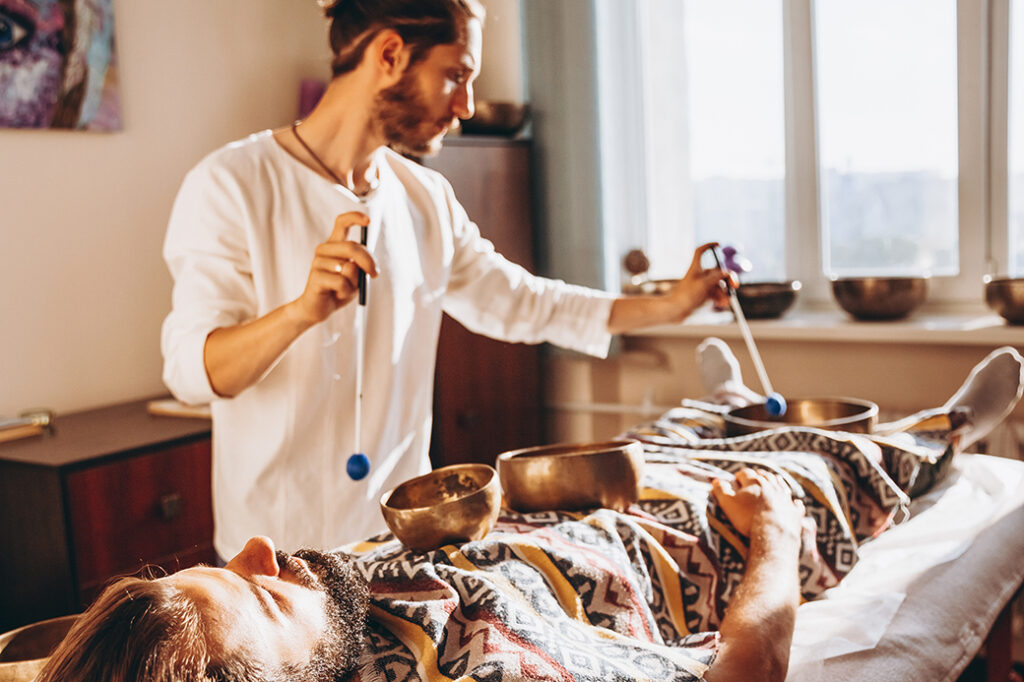
    Now, imagine yourself with your head in the middle of a concert of all kinds of healing instruments: tibetan singing bowls, gongs, drums… 

    The sound healer plays with each sound and vibration of its instruments as if he was playing with the vibrations of your body to reveal or heal something about you!

    Sound healing is very present in Puerto Escondido, and there are some excellent healers out there. 

    VIII- Realign your Energies with a Reiki Session

    Restore your body and mind energies with a Reiki healing session in Puerto Escondido. 

    Reiki is a form of alternative healing that originated in Japan in the early 20th century. The word “Reiki” can be broken down into two parts: “Rei,” which means universal, and “Ki,” which means life force energy.

    During a Reiki healing session, a Reiki master channels this universal energy to the recipient through their hands, promoting relaxation, stress reduction, and healing. The practitioner places their hands lightly on or near the recipient’s body in a series of positions, allowing the energy to flow. The recipient remains fully clothed and can either sit or lie down.

    The goal of Reiki is to restore balance and harmony to the body, mind, and spirit. It is often used as a complementary therapy alongside conventional medical treatments to support overall well-being. While some people may experience physical or emotional sensations during a Reiki session, it is generally considered a gentle and non-invasive practice.

    IX- Take a Yoga Workshop

    As you may have noticed by now, the Puerto Escondido yoga community is very big and everyone is so unique and so talented… 

    Luckily, some of these yoga teachers or healers regularly offer workshops in Puerto Escondido or Mazunte. 

    Yoga workshop, tarot reading, embodiment… you will have the opportunity to receive some beautiful knowledge and experience during your stay in P.E.  

    X- Take a Yoga Lesson on the Beach

    If you wait in the line of one off the coffee shops in La Punta or Rinconada, you will probably see flyers of yoga teachers offering beach yoga classes. 

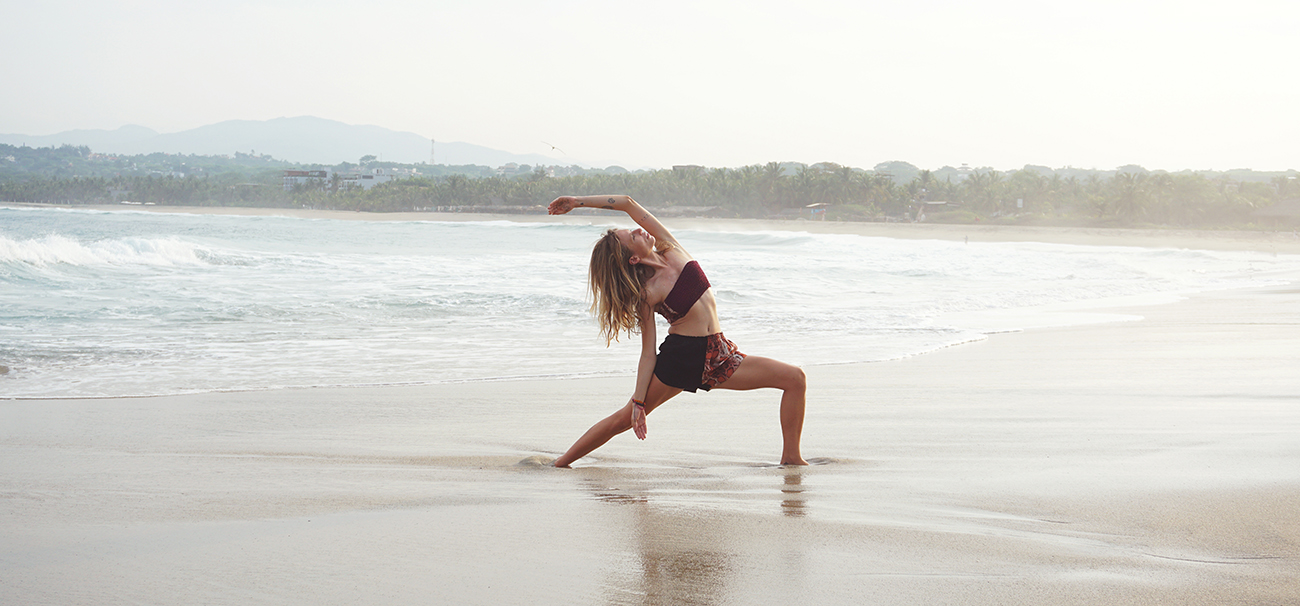
    Beach yoga is a form of yoga practice that takes place directly on the beach. It combines the benefits of yoga with the calming and grounding elements of being in nature, particularly by the ocean. Practicing yoga on the beach offers a unique experience due to the combination of the natural elements, such as the sound of the waves, the feel of the sand beneath your feet, and the fresh sea breeze.

    Beach yoga offers a wonderful opportunity to combine the benefits of yoga with the beauty and serenity of the beach environment, allowing you to nourish your mind, body, and spirit in a unique and refreshing way.

    I hope you have a better idea of the yoga community in Puerto. It’s an extraordinary place and you will fall in love with it… 

    If you have any more questions about yoga and healing activities in Puerto Escondido, do not hesitate to contact me. I’ll be happy to guide you!

  • Insomnia: The 10 Best Yoga Poses for Better Sleep

    Insomnia: The 10 Best Yoga Poses for Better Sleep

    Does your brain also get restless whenever you turn off the lights and lie in bed? – You are not alone, about 50% of the global population suffers from sleep disorders!

    Whether through medication or gentler, natural methods like practising yoga for sleep, many of us are searching for solutions to improve our sleep.

    Unfortunately, while medication may sometimes seem like the only effective solution for insomnia, it doesn’t address the underlying problem and therefore doesn’t cure sleep disorders.

    To learn more about bedtime yoga and how it can help you sleep better, read this article to the end!

    How Does Yoga Help with Sleep?

    In many cases, the reason why we can’t sleep doesn’t come from our daily stress, but from our perception of that stress.

    Read this sentence a second time, it is important!

    Therefore, if you really want to put an end to your sleep troubles or insomnia, you’ll need to target your emotions and thoughts instead.

    That’s why yoga can help you fall asleep, even researchers from Harvard University say so. According to this study, 55% of people who practice yoga have seen an improvement in their sleep, and 85% have reported a significant reduction in their stress levels.

    So, what are the benefits of yoga for sleep?

    • Yoga helps you let go: By stretching and relaxing our muscles, we provide our body and mind with the opportunity to release the tensions and stress that are stuck within ourselves.
    • Yoga affects our hormones: Certain postures act on the thyroid gland or the pineal gland, which directly influence sleep hormones.
    • Yoga helps you control your emotions: Yoga and meditation help us differentiate ourselves from the stream of thoughts and emotions that cause suffering in our daily lives, and often contribute to our insomnia. By distinguishing ourselves from this stream of thoughts, it becomes easier to control them.
    • Yoga teaches happiness: What is magical about yoga is that it teaches us what life is about and what happiness really is. By focusing on the present moment, and reconnecting with our senses and ourselves, we can realize what truly matters and open our eyes to the beauty of this world, of life, which brings a great sense of well-being and dissolves our anxieties.

    Therefore, yoga is a great tool for healing sleep disorders or insomnia. However, it is indeed a practice. Don’t expect to overcome your insomnia after your first session!

    Your insomnia could also come from other causes than psychological causes, such as sleep apnea or sleep narcolepsy

    In cases of severe insomnia, it is often recommended to complement your practice with therapy to understand its underlying causes. If you already know the cause, it is perfectly normal to experience periods of insomnia during challenging times in our lives, such as during bereavement or a change in our life (work, love, house…). However, these insomnia episodes are usually temporary. What transforms these temporary insomnias into chronic insomnia is simply our perception and the stress we create around them.

    You now understand why yoga, meditation, and thought control play an important role in our sleep.

    If you’re interested, feel free to ask me questions about Embodiment or Somatic Yoga, which are my specialities.

    What Type of Yoga is Best for Sleep?

    You may already know, but yoga is a vast world, and there is something for everyone!

    If you’re looking for an evening yoga practice to do before bedtime, it’s important to choose a yoga style that is meditative, even if you opt for a more dynamic practice with a flow of standing asanas and inversions.

    Here are some types of yoga that can promote restful sleep:

    1. Yoga Nidra: also known as “yoga for sleep,” is a practice based on body-centred meditation that induces a state of deep relaxation. It can also be used therapeutically to help overcome blocks or anxieties.
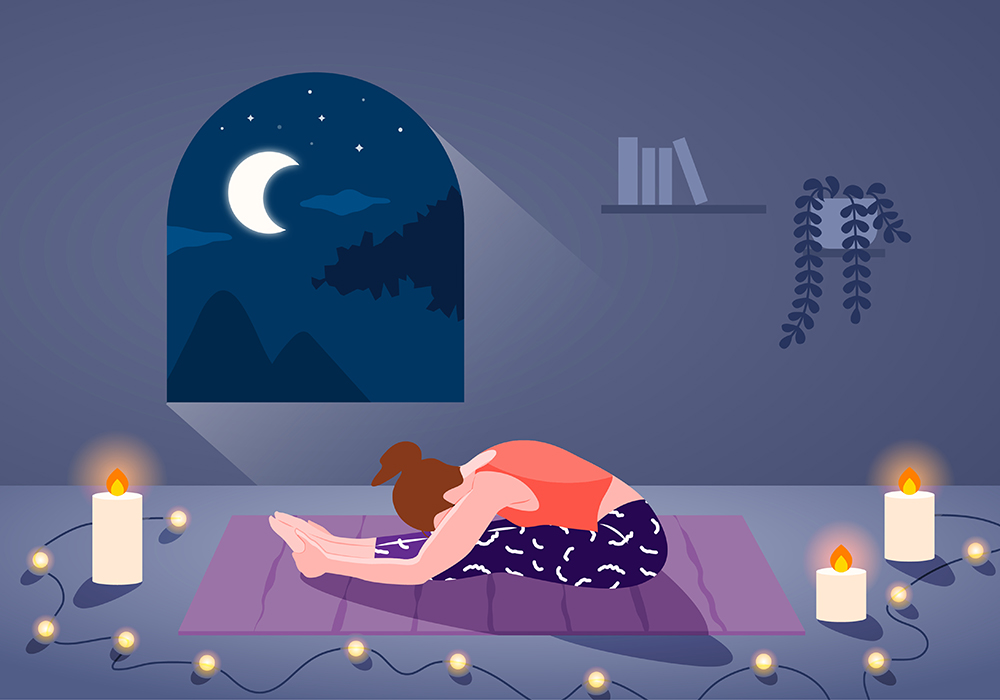
    2. Yin Yoga: it’s a style of yoga that focuses on seated or reclined postures that are held for approximately 3 to 5 minutes. This extended holding allows the body and mind to deeply relax into each pose. Practitioners of Yin Yoga often experience a sense of calm and relaxation after the practice, which promotes more restful sleep.
    3. Restorative Yoga: This type of yoga is designed to promote deep relaxation and help reduce body tensions. The postures are held for extended periods, similar to Yin Yoga, but with the support of cushions and other props to support the body and encourage relaxation.
    4. Gentle Hatha: Gentle Hatha yoga is typically a dynamic practice with a flow of poses, but slow and mindful. The postures are held for about 1-2 minutes, allowing time for meditation in each pose. The choice of asanas (postures) is crucial here, as some Hatha poses are designed to calm the body and mind, while others may provide energy and stimulation.
    5. Embodiment or Somatic Yoga: It is a type of yoga in which we explore the emotions of the body through somatic exercises or postures. By putting our bodies in certain positions, we can explore and change our emotions. Somatic yoga is usually used to help the body heal from past traumas or unleash some repressed emotions that are stuck within us, which can help with insomnia.

    Whatever yoga style you choose, take your time. You can have a totally different experience according to the yoga type and the teacher.  It is essential to explore and find a yoga style that resonates with you and supports your sleep goals.

    The 10 Best Yoga Asanas to Enhance Sleep.

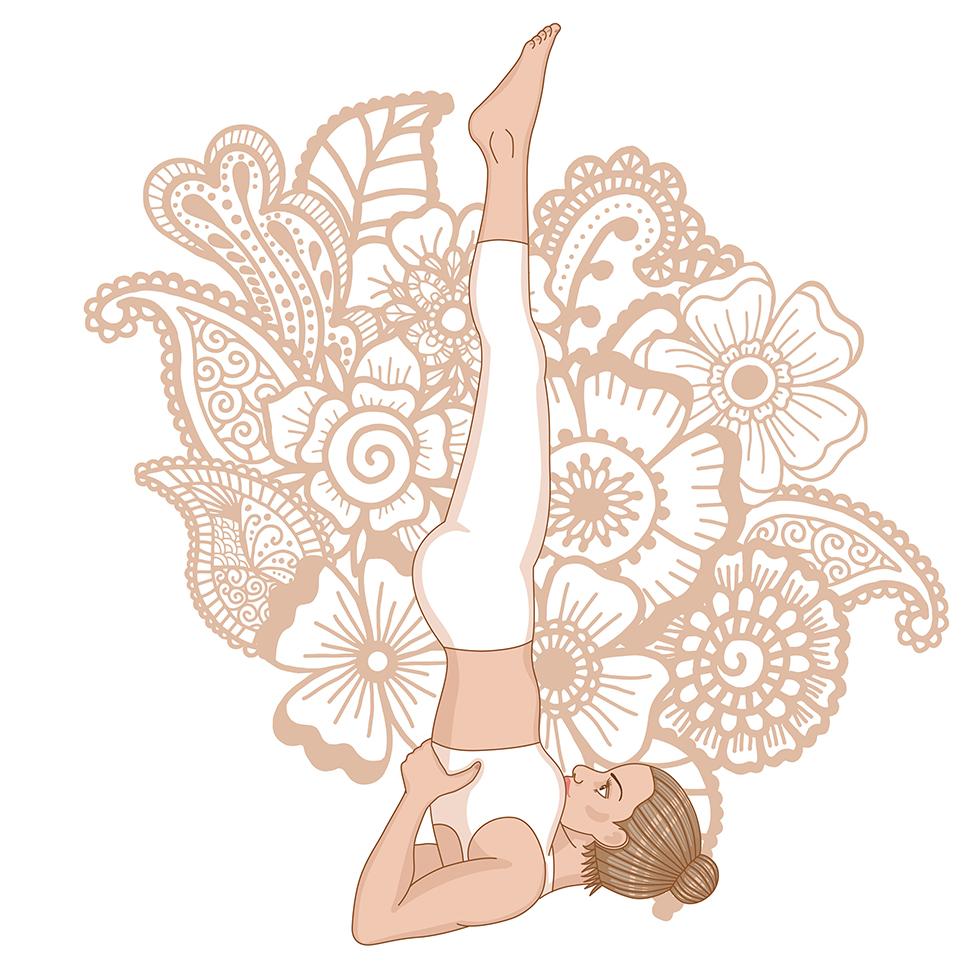
    1- Sarvangāsana: Shoulder Stand

    • Benefits: Sarvangasana or Shoulder Stand is one of the best asanas for sleep. By raising your legs up in the air, this posture reverses the emotions and energies in your body. The blood oxygenates the head, and your heart rate automatically decreases, allowing you to relax. This posture also provides a deep stretch for the neck and shoulders, releasing tensions and accumulated stress in that area of the body.
    • How to: Lie down on your back and bring your knees towards your chest. Place your hands against the lower back to gently support the lifting of your legs. Once the legs are up in the air, let the feet touch and focus your gaze on your feet without turning your head to avoid straining your neck.
    • Contraindication: Do not perform if you have neck tension or neck issues.
    • Magic tip: Perform against a wall, lying on your back with your legs up in the air! Allow all tensions to release for at least 2-3 minutes.

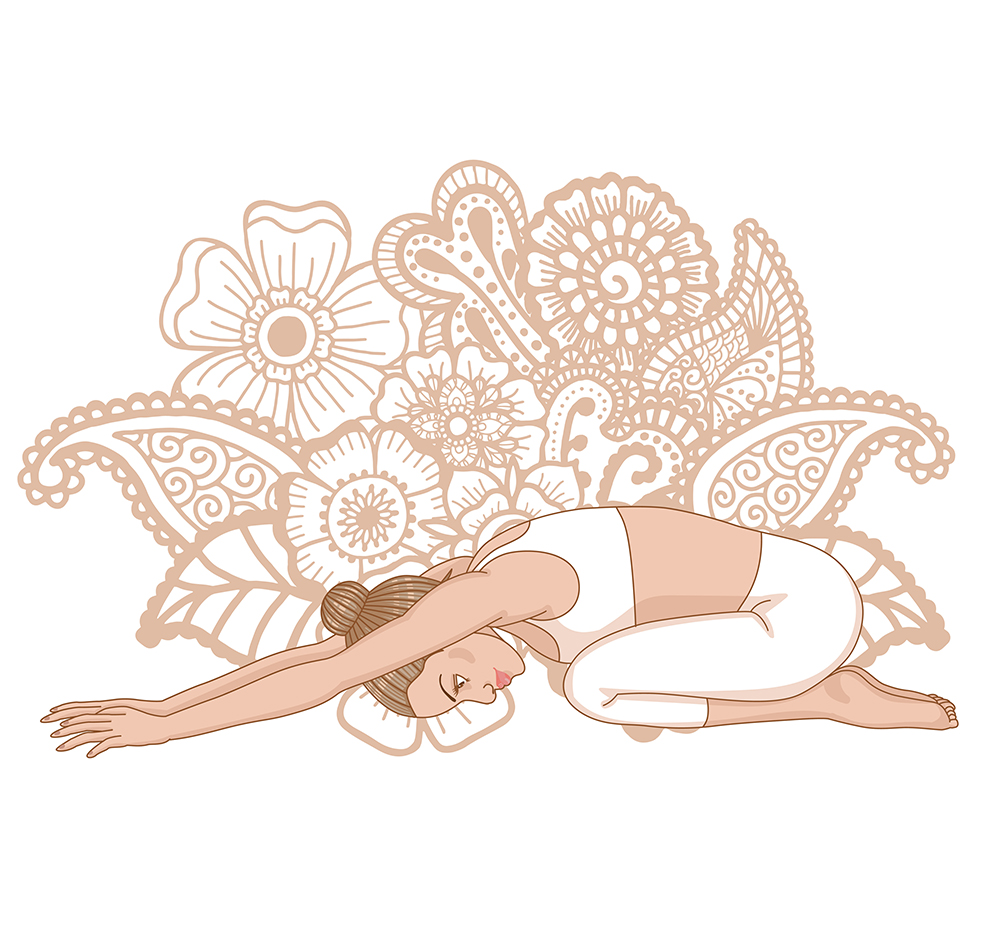
    2- Balāsana: Child Pose

    balasana-enfant-yoga

    • Benefits: Balasana, or Child’s Pose, is one of the best asanas for sleeping like a baby! With the head resting on the floor, this posture allows you to truly calm your mind and brings a sense of letting go.
    • How to: Start on your knees with your feet together and sit back, bringing your forehead to the floor. Extend your hands forward to stretch the back and shoulders, or bring them back with palms facing upward.
    • Contraindication: Be cautious if you have sensitive knees.
    • Magic Tip: Open your knees wide and rest your shoulders between them. Extend your arms backwards and gently sway your body from left to right, as if massaging your shoulders or pressing your head into the floor.

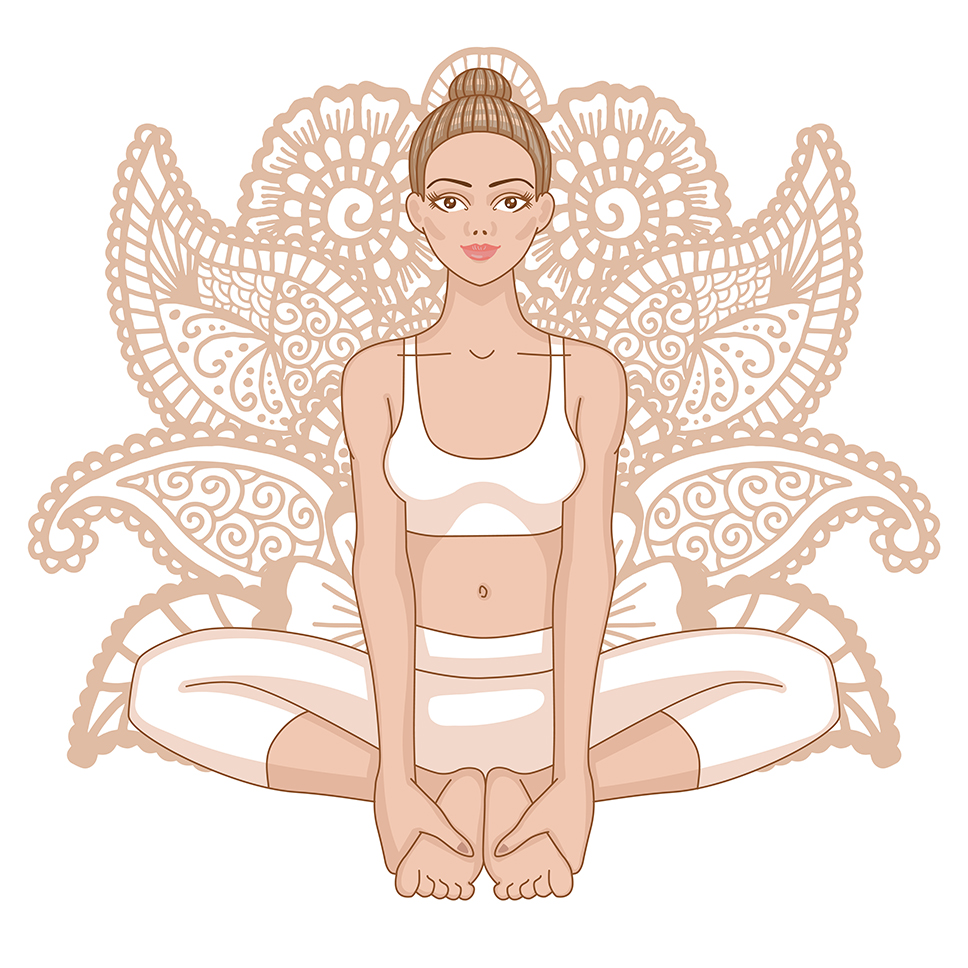
    3- Baddha-konāsana: Butterfly Pose

    Baddha-konasana-Posture-Papillion.jpg

    • Benefits: Baddhākonasana, or butterfly pose, offers deep relaxation for the body and mind. By gently tilting your head forward and allowing your hips, shoulders, and neck to relax, you will find yourself in a cocoon-like position where you can finally let go of all tensions and experience a sense of calm.  
    • How to: Sit with your legs extended forward, bring your feet towards your body (you can leave some space between your feet and body). Make small butterfly-like movements with your legs to relax the hips. Gently tilt your head forward and allow your head, shoulders, and knees to drop for deep relaxation. Stay in the pose for at least 3 minutes to let your body fully relax. If needed, sit on the edge of a cushion to bring your back forward.
    • Contraindication: Please be cautious of your neck. Do not lean forward if you experience tension or discomfort in that area.
    • Magical tip: Lie back with cushions placed along your spine for a reclined butterfly pose.

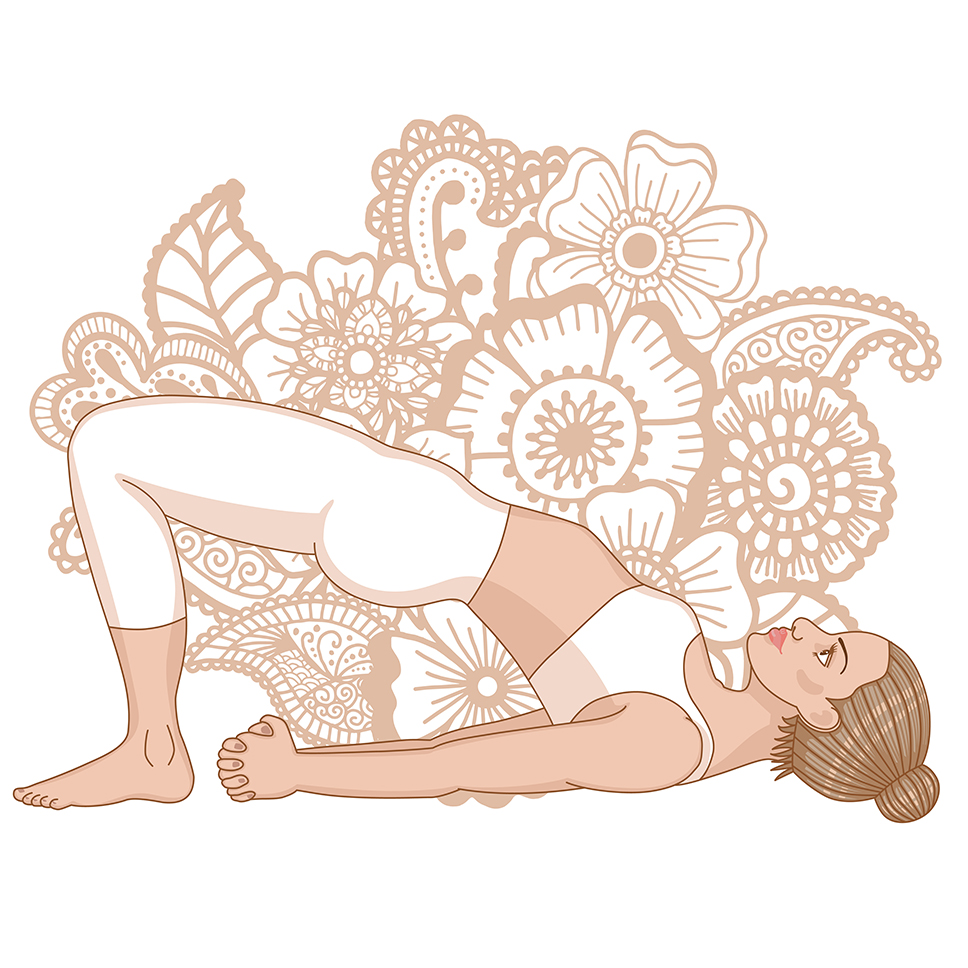
    4- Setu Bandhāsana: Bridge Pose

    • Benefits: Setu Banhāsana, or bridge pose, helps redirect all your energies towards the head, including the pineal gland, which aids in falling asleep and relaxes the nerves. This posture also enhances your abdominal breathing, naturally calming your body.
    • How to: Place your heels below your knees, spread your knees apart at hip-width distance, lift your buttocks, and bring your hands under your body as if you want your shoulder blades to touch. Try to maintain a straight line from your knees to your head. Do not turn your head.
    • Contraindication: Do not perform if you have neck tension or a headache
    • Magic Tip:  Place a block or several cushions under your lower back to maintain the posture effortlessly.

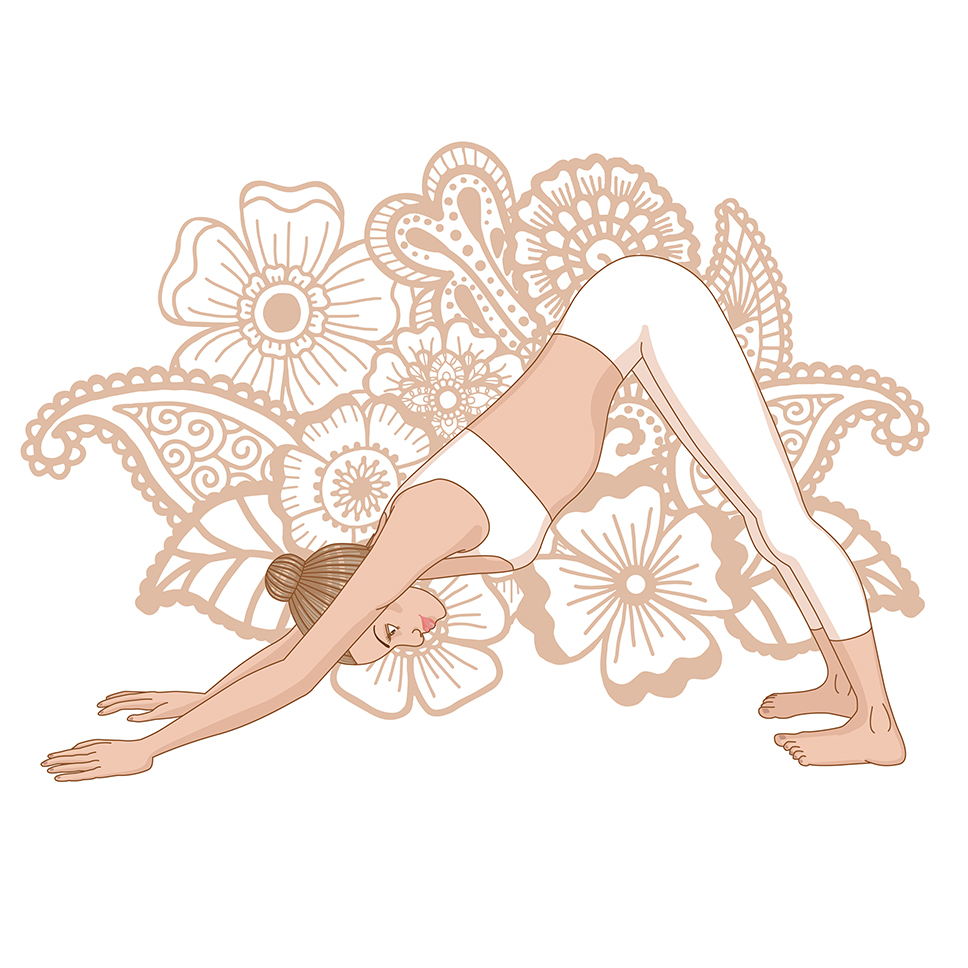
    5- Adho Mukha Svanasana: Downward Facing Dog

    • Benefits: Adho Mukha Svanasana, or downward dog, helps stretch your entire body and relax your neck, naturally releasing all tension. This posture slows down the heart rate and combats nervousness, promoting sleep.
    • How to: Place your heels below your knees, spread your knees apart at hip-width distance, lift your buttocks, and bring your hands under your body as if you want your shoulder blades to touch. Try to maintain a straight line between your knees and your head. Do not turn your head.
    • Contraindication: Do not practice if you have high blood pressure, advanced pregnancy, or headaches. People with carpal tunnel syndrome may also experience discomfort
    • Magic tips:  Bend your legs, grab each side of your yoga mat, and stretch your back while yawning, similar to how dogs or cats do.

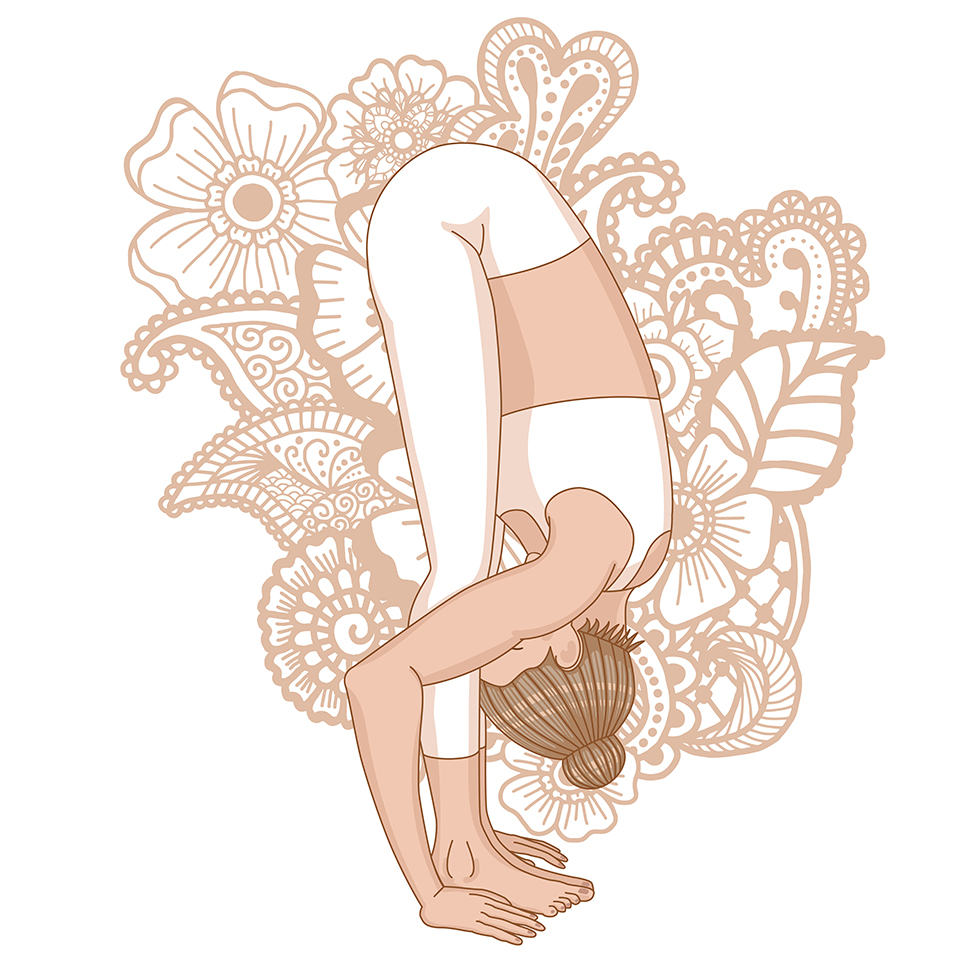
    6- Uttanāsana: Forward fold

    uttasana

    • Benefits: Uttanāsana, or forward fold, helps completely release your body and mind from any tensions or stress you may have. With your head downward, this posture soothes mental stress, alleviates migraines, and promotes better sleep.
    • How to: While standing, extend your arms up towards the sky and gently bring your hands and head down with bent knees, even if it’s just a slight forward fold. Once your head is down, allow your head and shoulders to completely relax.
    • Contraindication: Do not force the posture if you have tension in your back.
    • Magic tip: Grab your elbows and let your arms swing for optimal relaxation.

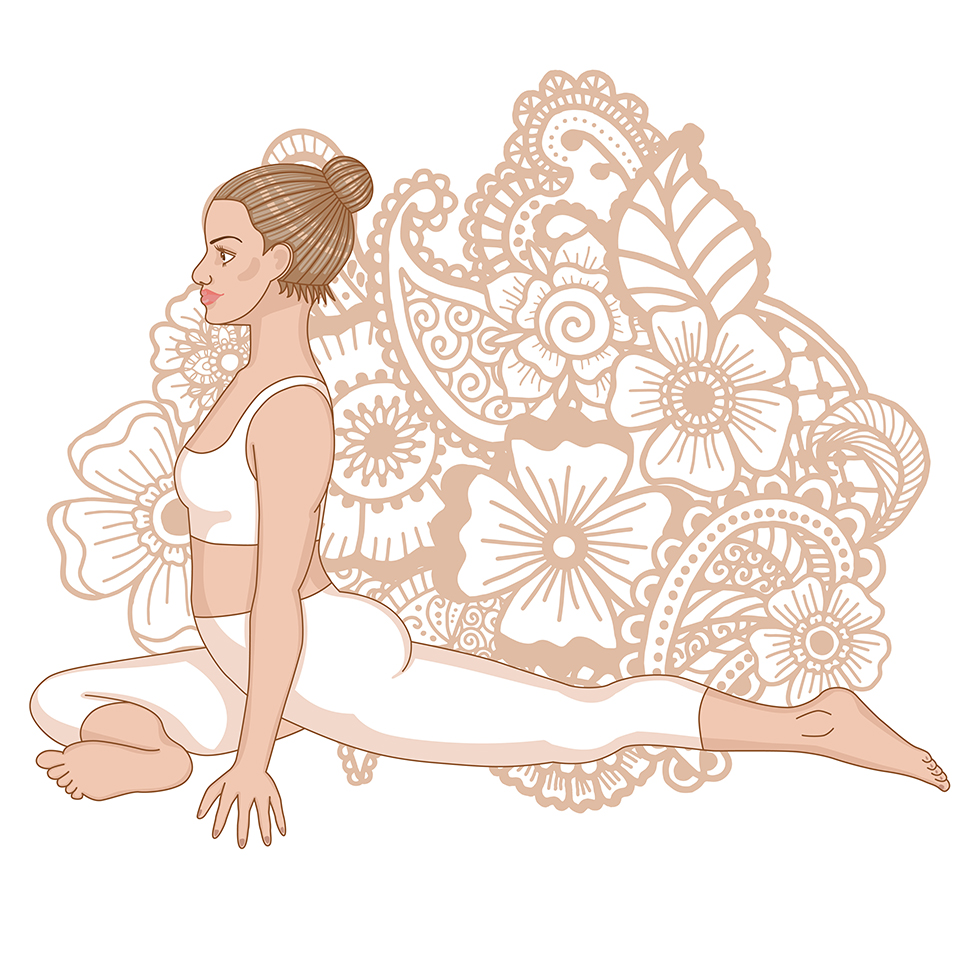
    7- Kapotāsana: Pigeon Pose (Head Down)

    Kapotasana-posture-pigeon-yoga.jpg

    • Benefits: Kapotāsana, or pigeon pose, can have two effects. Practising it with the head lifted can give you energy, while bringing your forehead to the floor helps your body calm down. This pose particularly helps relax your legs and hips. By bringing your head to the floor, you redirect the energy of relaxation towards your head.
    • How to: Start on all fours and bring one of your knees forward, between your hands, then slide the other knee backward. The front foot can be aligned with your body or perpendicular to it. Once you feel comfortable, you can bring your forehead to the floor and focus either on relaxing your hips or on your third eye and the space within your head. Feel free to place a cushion under your buttocks to keep your hips at the same level.
    • Contraindication: Do not practice if you have issues with your hips or knees.
    • Magic Tip: Place your forehead on a block or cushion.

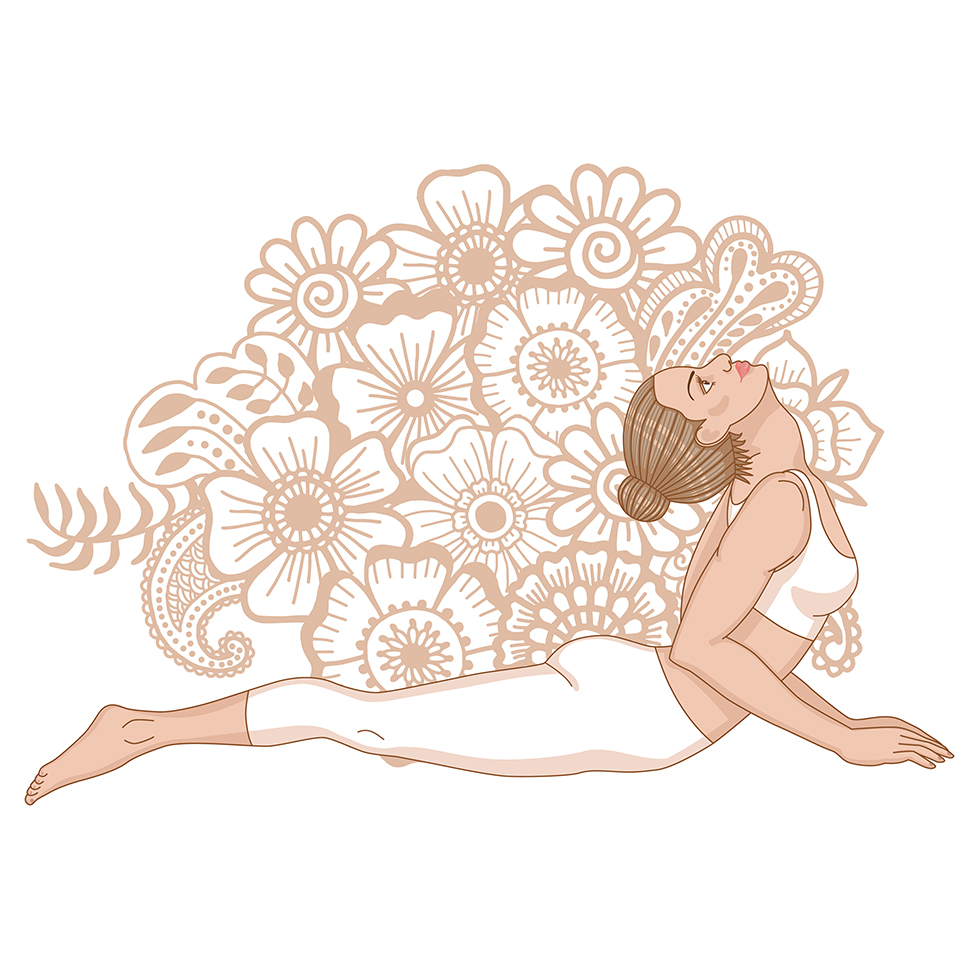
    8- Bhujangāsana: Cobra Pose

    Bhujangasana-Posture-Cobra-yoga

    • Benefits: Bhujangasana, or cobra pose, allows you to open your heart and release tension in your shoulders, helping you let go of all your minor worries and focus on what truly matters.
    • How to: Lie down on your stomach with your feet spread apart at hip-width. Place your hands next to your shoulders and push through your elbows to lift your chest and head upward. Press between your hips to protect the lower back.
    • Contraindication: Do not practice if you have pain in the lower back.
    • Astuce Magique: Relax your shoulders and look up at the sky with a smile to bring yourself joy and well-being. 

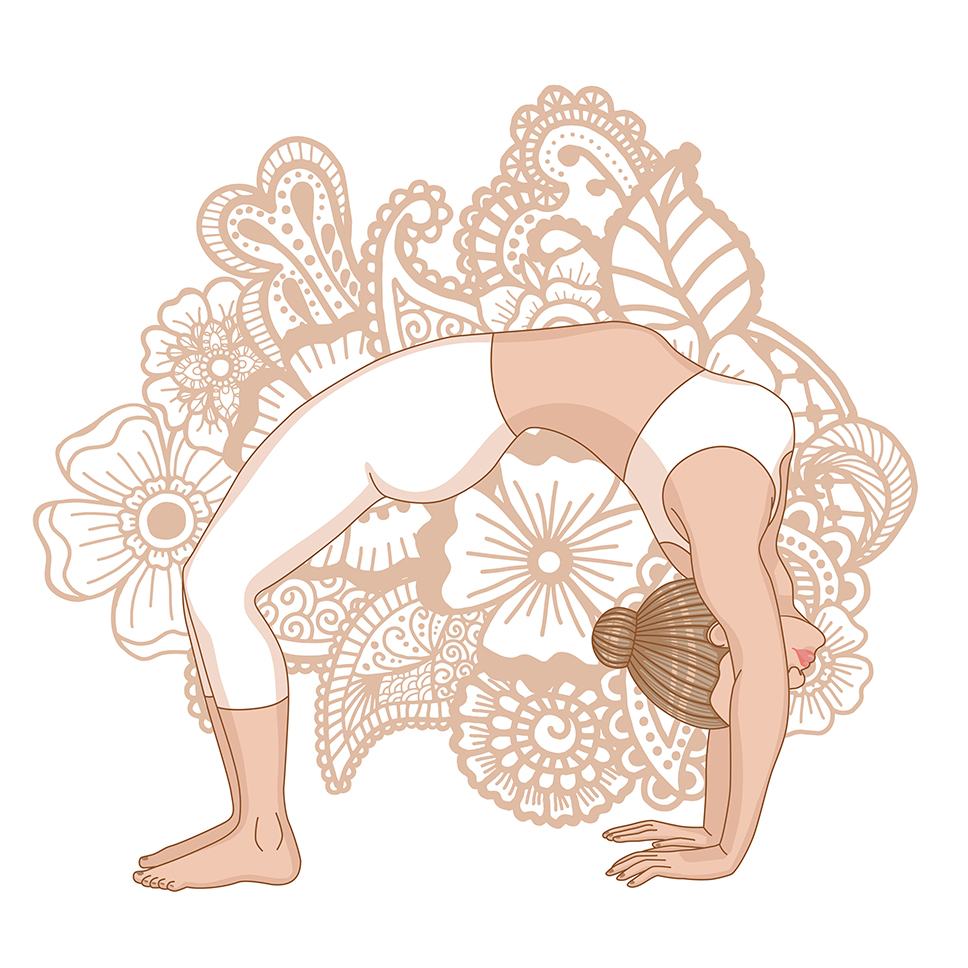
    9- Chakrasana: Wheel Pose

    • Benefits: Chakrasana, or Wheel pose, allows you to stretch your entire body and revitalize all your chakras at the same time, which rebalances the energies of your body and brings a sense of well-being. By stretching all your front organs simultaneously, you also rebalance your internal organs and the entire glandular system. This asana is also ideal for spinal flexibility and for individuals who tend to hunch their backs.
    • How to: Lie down on your back, bring your heels beneath your knees, with your feet pointing forward and knees apart at hip-width. Once your legs are in position, place your hands on either side of your head and lift your body by pushing through your feet and hands. Look at the floor while taking deep breaths. To come down, first place the top of your head on the floor before gently lowering the rest of your body.
    • Contre-indication: ne pas pratiquer en cas de problèmes ou douleurs dans le bas du dos ou à la nuque, après une opération abdominale, ou au-delà de trois mois de grossesse
    • Magic tip: Try to bring your hips forward to further flex the back. 

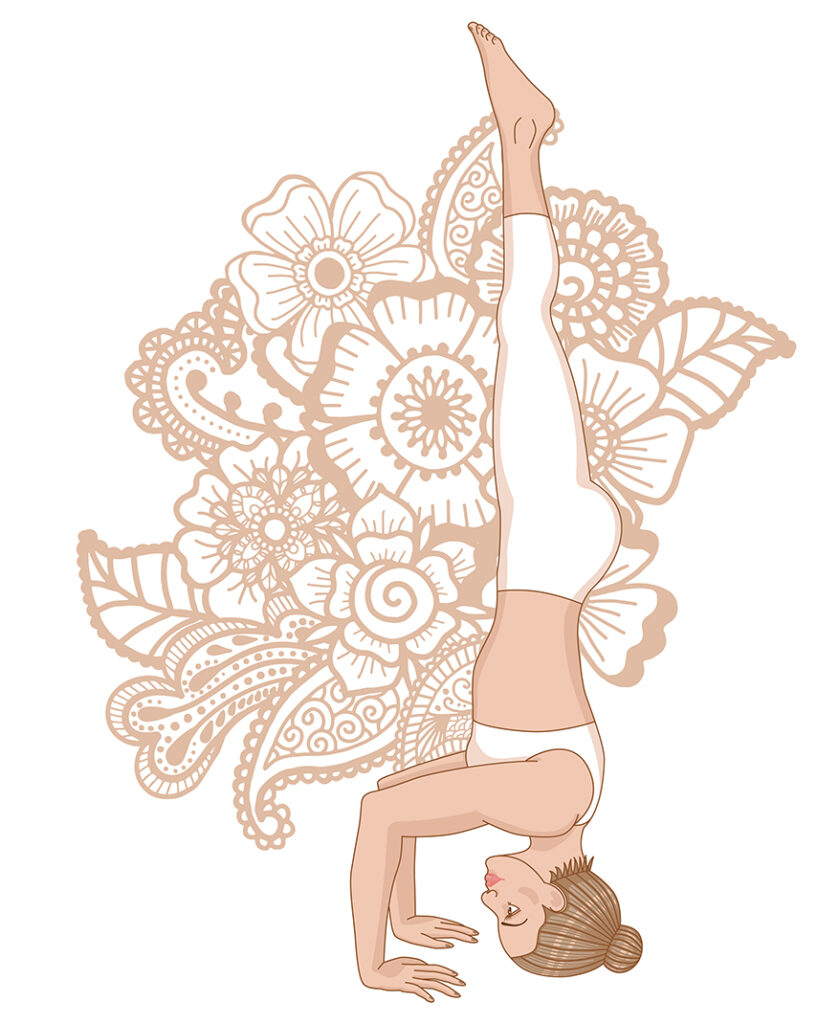
    10- Sirsasana: Headstand

    • Benefits: Sirsasana, or headstand, allows you to redirect all your energy towards the head, promoting better oxygenation of the brain, which enhances concentration, relaxation, and sleep. Sirsasana also stimulates the thyroid and pineal glands, which regulate the sleep-wake cycle and aid in falling asleep.
    • How to: After warming up your neck, shoulders, and abdominal area, start in a child’s pose position. Then, reach your arms forward and grab your elbows to open up your arms, creating a triangle shape, and interlace your hands. Create a small nest with your hands and place your head, with the top half of your head (between your forehead and the center of your head), against the floor. Straighten your legs and walk towards your head until you can’t go any further. Engage your core, upper back, and shoulder muscles to gently lift your legs while keeping them bent until your torso is completely upright. Once your torso is upright, slowly straighten your legs and bring your feet together.
    • Contraindication: Do not practice alone for the first time. If you are unsure, start with the support of a wall. Do not practice if you have neck problems or herniated discs, if you are pregnant, or if you have eye problems such as retinal detachment. It is also advised not to practice Sirsasana during the early days of menstruation.
    • Magic tip: Focus on a fixed point (dristi) and remain still for at least one minute. This requires a lot of concentration and forces you to meditate. 

  • What is Tantra? From its Origin to its Practice

    What is Tantra? From its Origin to its Practice

    Part of Tantra, or Tantrism, remains a mystery to our society. Before diving any further, let me ask you: “What is your idea of Tantra?”

    To make things clear: Tantra doesn’t mean sex!  

    Tantrism is very often misconceived by our modern society, which often assimilates it with sex, the same way yoga tend to be assimilated to a workout. 

    Tantra comes from so far away in history and has only been discovered recently by Westerners. We don’t have all the knowledge of what started this tradition, even though we are able to understand enough about Tantra to be able to retrace its evolution through history.

    Tantric philosophy has a myriad of secrets to be discovered. It’d be hard to explain Tantra to someone that has never practised it, as it’s hard to intellectualise feelings and energy. 

    Dive in with me and let’s discover Tantra together! 

    THE ORIGIN OF TANTRA

    What Does Tantra Mean?

    The Sanskrit term Tantra simply means “technique”, or “book”.

    We know that asanas, pranayama, meditation, kundalini, and other practices existed before Tantra. Tantra is the spiritual path that weaves all of these sacred practices and rituals.

    One of the best Tantra definitions I found is probably the one from David Frawley:  

    "Tantra can perhaps best be defined as an energetic approach to the spiritual path, using various techniques including mantra, ritual, pranayama, and meditation. It contains a devotional approach emphasizing the worship of the Goddess and her Lord, Shiva. It contains a way of knowledge , directing us to self-realization and realization of the Absolute" 
    
    -DAVID FRAWLEY, TANTRIC YOGA & THE WISDOM GODDESS
    

    That said, it is clear now that Tantra doesn’t mean SEX, even though sacred sexuality could be part of your Tantric practice.

    Tantra is a devotional lifestyle using different techniques, like yoga, rituals, meditation, herbs or sacred dance, in order to find the light within yourself.

    When and Where did Tantra Originate? 

    Because we don’t have any academic records that can trace back the origin of Tantra history, it’s very hard to tell exactly how Tantra began. In fact, Tantric teachings were more verbal teachings that were passed on to students by their respective teachers, or gurus. 

    As seen before Tantrism is just the movement, or philosophy, that systematized all the practices that were there before, such as yoga, pranayama, mantra and rituals. 

    Tantra originated in India within Hinduism during the first Millennium CE (year 1-1000), where it was a spiritual tradition there. 

    From its origin, Tantra was more a religion than a philosophy. It was practised devotionally towards a god or a goddess, like Shiva, the father of Tantra. Tantric traditions have changed over time and have a long and illustrious history in India, Tibet, Assam, Kashmir, and Nepal.

    While spreading around the world, Tantra got divided into two Tantric paths: the left (Vamachara) and the right-hand path (Dakshinachara).

    Dakshinachara comes from the Tantric lineage “Samaya” (according to the rules) and it requires a high degree of purity in conduct and action. Vamachara comes from Kaula (according to the family) and allows various types of practices like sexual practices, the use of meat, and intoxicants.

    Shiva, Shakti and Kundalini

    In Tantra or in Hinduism, there’s no “human” god. there is just one giant cosmic consciousness that is represented by different avatars.

    Shiva is the father of Tantra. He is what represents our divine consciousness. Shakti is the great goddess or the cosmic feminine force.

    According to Tantric Science, Shakti energy or the Kundalini resides inside each one of us, but it’s dormant and for most people, it’ll never be awake. In Tantra, we work on our chakras and on our different body channels (Nadis) in order to allow the Kundalini to be aroused. Once all our chakras are balanced and our different Nadis are clear, the kundalini that is represented by a serpent can rise and travel to higher chakras in order to meet Shiva. This is when consciousness begins to occur.

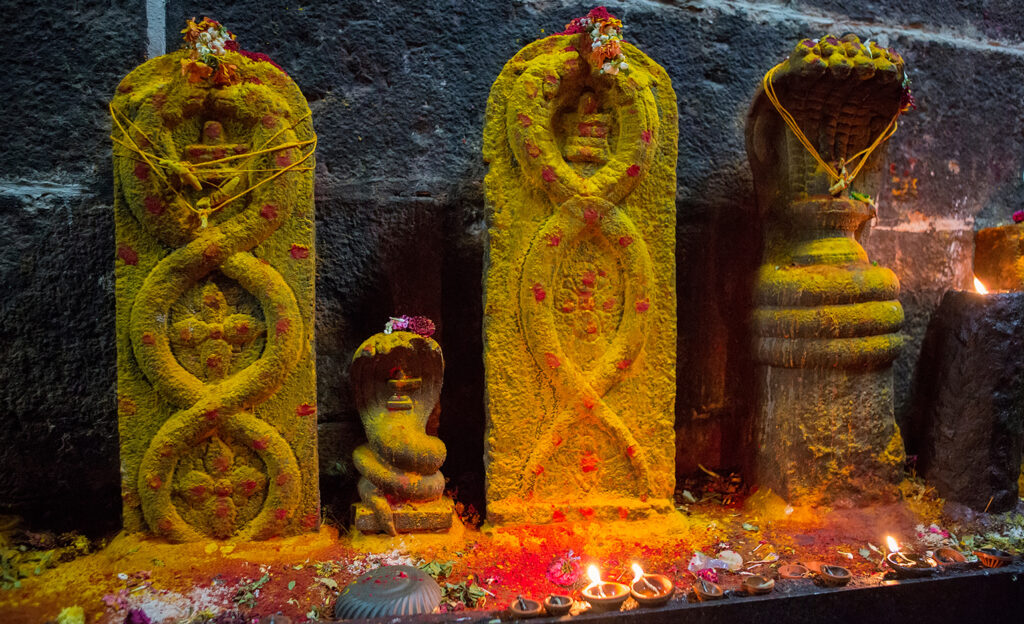
    Kundalini Representation in Arunacheshvara Temple, India

    In Tantra, the masculine force is more passive and the feminine force Shakti can be very powerful, which is the reason why anyone that wants to go deeper into these practices needs a master.

    Tantra and Sacred Sexuality

    With the Sacral Chakra (Svadhisthana), Tantric philosophy clearly recognise the power of our sexual energy in the human body. However, If you want to talk about Tantric sexuality, don’t call it “Tantra” but “Sacred Sexuality”.

    What is Sacred Sexuality?

    Tantra would never encourage self-repression, as some religions do with sex, but to have some self-discipline and live free from uncontrolled desire.

    For Tantra, true happiness comes from consciousness and not from possessions, desires, or related activities. Tantra strongly recognises that repressing sexual activities can be harmful as it builds up repressed energy that stagnates inside your body, which usually causes physical and emotional disturbance.

    Sex is the core energy of our existence– Tantric Teaching

    Tantra tends to turn all ordinary activities such as breathing, eating, sleeping, or having sex, into rituals or sacred estate of the body. For example, if you’re a Tantra practitioner, you meditate on your food before eating.

    That said, we should keep in mind that one of the most essential concepts in Tantra is detachment and living a life free from desire. If sexual activities shouldn’t be shamed, they shouldn’t be misused either.

    Indeed, Tantric Sexuality is quite specific as it looks more like a loving meditation where two partners are seeking awareness together rather than excitement.

    If you want to know more about sacred sexuality, wait until the end!

    Where Does Tantric Sexuality Come From?

    Now that you know the link between Tantra and sacred sexuality, let’s see what exactly happened that made us think that Tantra equal sex:

    When the first Westerners started travelling to India, some of them were fascinated by the Tantric philosophy and brought what they understood of the philosophy back to Europe, or America. As there’s no secret sex is something everyone is interested in, it became the main Tantric characteristic spread out to the western world.

    Most western Tantric practices don’t come from India but from Europe or from America, like Tantric massages that come from Germany.

    Even though some of these new practices aren’t from India and Traditional Tantra, they still can be integrated as a Tantric practice in order to build a strong connection with the body and Svadhisthana chakra.

    However, keep in mind that sacred sexuality is a spiritual practice and that it should never be abused. Moreover, it should never create any kind of attachment or suffering.

    HOW TO PRACTISE TANTRA?

    Tantra as a Spiritual Path

    By now, you should be able to understand that you don’t become a Tantra practitioner in one day. It is a spiritual path that embraces life in its various energetic manifestations in order to reveal who we are.

    If you’re really interested in Tantra, I would recommend starting with a yoga class from a certified Tantra Yoga teacher and maybe some readings about Tantra. A good introduction to Tantra is Tantric Yoga and The Wisdom Goddesses by David Frawley.

    If you realise that you like it and want to go further in your practice, I highly recommend taking a Tantra yoga retreat. Make sure it’s real Tantra and not some deviant form of Tantra. Some organisations, or gurus, might be taking advantage of people’s desire to experience something new and the misconception of Tantra’s practices.

    I can’t recommend enough the Tantric Yoga School where I did my Tantra Yoga Teacher training. Satya Loka is one of the most authentic yoga schools you might find out there. My yoga teacher training was more about the true experience and philosophy of yoga, rather than just the Asanas.

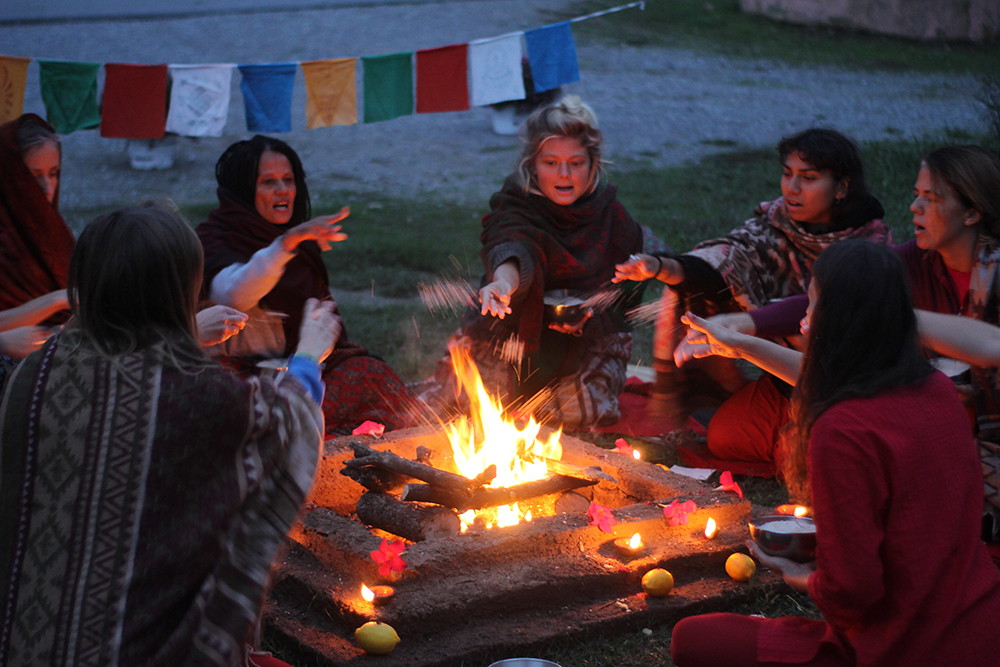
    Satya Loka Students practising Yagna Sacred Fire Ceremony – Photo Credit: Barbara Cermak

    During your yoga teacher training with Satya Loka, you will experience Tantra ceremonies, sacred dances & meditations. Through all these beautiful rituals, you’ll discover new characteristics and emotions. You will discover what is Tantra!

    How to practise Tantra in your Daily Life?

    There is no right or wrong way to live in Tantra, as long as there is no attachment, no desire that causes suffering. To live in a Tantric way is to live with awareness as if everything around you was a miracle (which actually is)!

    Have you ever paid attention to how babies look at the world? The sparkles and the amazement in their eyes are something precious that we drop as we grow up. However, this state of awareness is absolutely necessary for happiness and for self-realisation.

    A Tantric practitioner is someone seeking his true nature by connecting his soul and his body to the cosmic energy of the universe.

    Indeed, a Tantric practitioner is someone that is deeply connected to his body, at a cellular level. We can reach this connection by practising some types of yoga (Kundalini, Hatha..), pranayama and meditation.

    The goal of every Tantric practitioner is to open all its energy centres (chakras), in order to let the divine goddess energy (Shakti or Kundalini) rise and make one with our divine consciousness (Shiva). This particular phenomenon is what we call enlightenment, but only a few people get the chance to know what is it to be enlightened. Some of the famous ones are named Buddha, or Eckhart Tolle for example.

    In Tantra, we practise many rituals in order to connect with the divine, like Yagna fire ceremonies, Shakti Sacred Dance or Tantric Sadhana. In India, they practice these types of rituals quite regularly.

    How to practise Tantra Yoga?

    As a devotional practice, Tantra yoga is a type of yoga where the yogis set an intention and try to connect their body energies to the higher consciousness.

    In India, they would set an intention to a god, or a goddess, but you can also set an intention to the sun, love or mother earth… As long as you are being true to yourself and comfortable with what you’re doing.

    Tantra Yoga is usually based on Hatha yoga, which is the first type of yoga that was practised in India. You could choose another type of yoga like Yin or Kundalini, which is a very powerful Tantric practice. Always keep in mind that to practice Tantra it is absolutely necessary that the type of yoga you choose allows you to spend time in the Asana, in order to connect to your chakras and feel what you have to feel.

    During a Tantra Yoga class, the teacher should make the students practice yoga consciously. The yogis should be aware of their chakras and feel the energy at a cellular level, in their subtle bodies. The teacher should guide the student through the journey, as connecting to the chakras isn’t something spontaneous for most of us! Especially when it’s the first time.

    Time for contemplation is absolutely crucial in Tantra Yoga! Every Asana has an effect on our chakras and you cannot be connected to your chakras or to your body unless you really take the time to feel what’s happening inside. Each Asana should be held for at least 1 or 2 minutes.

    Indeed, Tantra Yoga is more of a meditation where we use the Asanas to energise our Chakras and feel the connection between our bodies and our minds.

    To deepen the communication between our bodies and our minds, in Tantra yoga we use pranayama, mantra, or banda. Your Tantra yoga class could also incorporate a sacred dance or some mantras in between the Asanas, as long as the dance is adapted to the flow of energies.

    This is one way of structuring a Tantra yoga class:

    • 10 minutes of pranayama practise
    • 10 minutes of meditation
    • 1 opening mantra
    • Asanas for the chakras
    • 1 sacred dance
    • Asanas for the chakras
    • 10 minutes of pranayama practise
    • 10 minutes of meditation
    • 1 closing mantra

    How to Practice Sacred Sexuality with a Partner?

    As mentioned previously, sacred sexuality isn’t necessarily part of Tantra. However, Tantric science recognises sexual energy as a primal life force, as love itself. Therefore, it should be respected and honoured.

    Sexual energy isn’t only responsible for life itself but for creativity and expression.

    Unfortunately, we live in a society where our sexuality can be a source of shame and trauma, which is the reason why bringing light to this aspect of our being can be part of the enlightenment process.

    Tantric sexuality aims to transform this sacred energy into a conscious and spiritual experience.

    Some basic guidelines on how to practice Sacred Sexuality:

    • Choose the right partner. Someone that is willing to explore sexuality in a sacred way with you. Someone that understands the spiritual aspect of life. Ideally, someone that is connected to his/her own energy and someone that practices some kind of activities that promote purity (yoga, meditation, activities that connect with nature…).
    • Create a sacred space and take time to meditate together and recognise each other as more than just a role in one’s life or more than just a body.
    • Breathe together and explore your body. At every moment of excitement, come back to the previous step and use meditation to release any expectation for orgasm.
    • Keep the energy to the heart and above.

    I hope that this article brought something new and that you have a better idea about what Tantra really is.

    I am a Certified Traditional Tantra Yoga Teacher and I would be happy to guide you if you have any questions about Tantra or about yourself.

  • Where to Practice Yoga in Puerto Escondido?

    Where to Practice Yoga in Puerto Escondido?

    Are you planning on spending some time in Puerto Escondido? – If yes, you definitely have to try some of the yoga classes Puerto has to offer!

    If Puerto Escondido is world-famous for being a surf town, it’s also one of the best yoga spots you can find in Mexico! It’s no secret that yoga and surf have been flirting together for many years now. Here in Puerto, 80% of the population is either a surfer, either a yogi or both…

    Mexico is a very spiritual country with a lot of ancestral traditions (cacao ceremony, Temezcal…). And when Mayan rituals blend with the yogic world, it just creates something magical!

    Yoga is so big in Puerto, that you might find yourself a bit lost at first. Especially if you’re here for a few days only… What yoga place or class would suit me the best?

    After 3 years of living in Puerto and practising yoga, as a teacher but also as a student, here are my recommendation

    I- Marea Yoga Studio: For the Community

    If you want to do yoga regularly in Puerto, in a good place where it feels like family, then Marea is the place. Owned by Victoria, the owner of the well-known and delicious Lychee restaurant, Marea Yoga Studio is one of these places where everyone is adorable and so passionate.

    You will find some great yoga teachers in Marea… Traditional Tantra, Hatha, Vinyasa, Yin, and even aerial yoga… there is a yoga class for absolutely everyone, and all the teachers are amazing!

    Moreover, these incredible yoga instructors regularly organise ceremonies like cacao ceremonies, which include ancestral teaching, Yin yoga, sound healing meditation, and other surprises.

    It’s not only because I teach there that I am talking about Marea, but it’s also the choice of many ex-pats and residents in Puerto Escondido.

    Find all the events and the yoga schedule on Instagram

    Note that Marea is also a cute guest house, where you can stay and enjoy the yoga spirit of the place.

    II- Raíz Hotel: For the Quiet Jungle Atmosphere

    Have you heard about Raíz Hotel? – It’s maybe one of the nicest places to do yoga. If you’ve been in Puerto long enough, you’d know that Puerto Escondido isn’t a quiet town. Even though it is located at the entrance of La Punta, Raíz Hotel is maybe one of the quietest places to practice yoga. No trucks passing on the street, no people, just the birds and the waves at a far distance… 

    Moreover, Raíz Hotel is in a place surrender by lush palm trees, which gives a peaceful atmosphere, ideal to practice yoga and meditation. 

    Raíz yoga schedule is ideal for people that work, or that want to do other activities during their day, as the classes start at 9 and finish at 10!

    Check their calendar on their Instagram 

    III- Selina: For the Experience

    Selina is one of the most famous backpacker resorts in Latin America. Some people just never live and travel only where they are. 

    Why? – Because they offer one of the best experiences to travellers: Amazing rooms with AC, modern and design coworking space, yummy restaurant, dope activities… You just have to arrive and let Selina guide you!

    Pretty much all Selinas around the world offers yoga. The one in Puerto offers some of the best yoga activities with sound therapy, traditional tantra and dance therapy. 

    Have a look at their schedule and see what fits you!  

    III- Barbarenas: For the Stunning View

    Barbarenas-puerto-escondido-yoga

    The breathtaking view and jungly space make Barbarenas one of the must-try yoga places in Puerto Escondido

    Make sure you follow them on Instagram because Barbarenas is a place full of beautiful surprises!

    Ancestral ceremonies, rituals, and retreats are part of the regular events you might find in Barbarenas. They even created the famous Puerto’s “B-Rave” (or breakfast rave), which is a morning rave that usually starts with yoga and meditation, then you get offered a nice vegan breakfast, before raving with some of the best DJ of the area until sunset.

    It’s also one of the nicest places to stay as a guest. Barbarenas offers the possibility to do your own retreat. They have different packages with yoga and/or surf, and different lengths of stay.

    If you get the chance to experience this place, make sure you can experience the Traditional Tantra yoga class. It’s a really beautiful practice in which you’ll find yourself truly connected to your body and nature. Tantra yoga is one of the oldest yoga practices. It is a Hatha-based practice that usually includes meditation, pranayama, and mantras. You can learn more about Tantra Yoga here.

    IV- Yoga One Love: For the Good Vibes

    “Let’s get together and feel alright” is definitely a good line to describe One Love Yoga.

    As one of the first yoga places that existed in Puerto Escondido, One Love has a lot of experience and some of the best teachers you’ll ever meet, like Mario that literally has people queuing for his yoga classes!

    Moreover, One Love Yoga PE has a huge palapa with all the yoga gear you need, and… the cherry on the cake… a beautiful view of the ocean!

    Close to the water, enjoy the breeze and the sound of the waves while you’re practising your asanas, like a beautiful and peaceful warrior.

    If you’re looking for a place to stay in Puerto Escondido, you’ll probably fall for One Love 60’s Rock and Roll music legend-inspired dorms and bungalows.

    “An emblematic era of love, rebellion, and mysticism”

    This is how they define their spirit!

    Best for last, One Love Hostal has a lush garden that is so green that you will feel like you’re in another universe!

    VII- Yoga Shala, Arte y Espiritu: For the Local Environment

    Everything is in the name “Arts and Spirit”. Yoga Shala is maybe one the most authentic yoga place in Puerto Escondido with a lot of artsy and spiritual events.

    This is “The” local place for yoga. Many teachers are Mexicans and the lessons are in Spanish, which makes this place ideal to meet locals and experience a beautiful blend of Mexican’s ancestral spirituality and yoga.


    VIII- Jardín Ganesha- For the Environment

    Created by Beto Nijanando, a well-known and very inspirational yogi in Puerto Escondido, Jardín Ganesha is a dream place to practice yoga.

    It’s actually an excellent Yoga school that gathers some of the best yoga teachers in Puerto and has numerous events like ecstatic dance or sound healing circles.

    As said in the name, Jardín Ganesha is a beautiful garden, which not only has a yoga studio but a few cute Tipi-style accommodations for its guest.